

Key Takeaways
- Puppy biting is a normal developmental stage, not a sign that something is wrong with your dog. Guiding it early protects human skin and builds safe adult behavior.
- Calm, consistent redirection to puppy safe chews, immediately stopping play when teeth touch skin, and avoiding yelling or rough play are the most effective strategies to stop puppy biting.
- Bite inhibition, daily routines, scheduled naps, and regular potty breaks all reduce puppy nipping and overstimulated biting.
- Basic puppy training skills like sit, place, leave it, and recall give dog owners real tools to manage excited biting around people.
- If biting persists, escalates, or shows signs of aggressive or fearful behavior, professional puppy training in Dover and Southern Delaware can make a significant difference.
Introduction
If you have a new puppy in your home, you already know the sting of tiny teeth on your fingers, ankles, and favorite pair of pants. Figuring out how to stop puppy from biting is one of the most common challenges families face, especially with young children around.
The good news is that you can reduce biting without creating fear or confusion. This article walks through why puppies bite, what is considered normal, which methods backfire, and step-by-step ways to teach your puppy how to stop puppy from biting while building gentler mouth behavior that lasts into adulthood.

Why Puppy Biting Happens
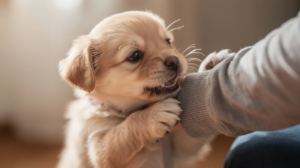
Puppy biting is a part of their developmental process. Puppies explore their environment by mouthing and chewing, much like toddlers use their hands. Their mouths are their primary tool for learning about textures, boundaries, and social rules.
Several triggers drive biting behavior in young puppies:
- Teething discomfort. Puppies begin developing baby teeth early, and those baby teeth usually start falling out around 12 weeks as permanent teeth begin to come in. Most puppies have 28 deciduous teeth that are eventually replaced by 42 adult teeth, with adult teeth usually in place by about 6 months. Sore gums during this process can make puppies more likely to chew, mouth, and bite whatever they can reach.
- Play and excitement. Puppies naturally nip during play. When puppies play with their littermates, they learn bite inhibition from their mother and littermates through yelps and social corrections. In your home, you take over that teaching role.
- Overstimulation. In busy homes with kids, guests, or multiple pets, a playful puppy can quickly become overstimulated. Play biting often intensifies when energy runs high.
- Curiosity. Puppies bite due to curiosity and teething discomfort. Everything from your shoelaces to your fingers is worth investigating with their mouth.
- Stress or fatigue. A tired puppy is a mouthy puppy. Biting often spikes right before nap time or after long stretches without rest.
Understanding these triggers is the first step. The problem is not your puppy’s mouthing itself, but the lack of consistent guidance around it.
Is Puppy Biting Normal?
Yes. Most puppies go through a biting stage that is completely normal. Many puppies improve as teething settles, training becomes more consistent, and they learn better bite inhibition, but there is no exact age when every puppy stops biting. Some puppies improve around the time their adult teeth come in, while others need more guidance, structure, and repetition before mouthy behavior fades.
Normal mouthing in young puppies looks like this: a wiggly body, relaxed body language, soft tail, and gentle mouthing mostly during play or excitement. Playful mouthing is exploratory. The puppy is testing social boundaries, not being aggressive.
Warning signs that something may be more serious include a stiff, frozen body posture, intense staring, repeated hard bite attempts, or guarding food, toys, or resting spots. These can signal aggressive or fearful behavior and call for professional evaluation from a vet or dog trainer.
The goal is not to make puppies never use their mouths. It is to help your puppy learn good bite inhibition so teeth on human skin become unacceptable as the dog matures.
How to Stop Puppy From Biting Without Making It Worse
Here is a straightforward approach for how to stop puppy from biting using calm, consistent responses:
- Pause the interaction. When your puppy bites too hard, freeze. Do not jerk your hand away, as fast movement can excite the puppy further.
- Mark the bite. Use a calm vocal marker like “Ouch” or “Too bad.” Some puppies respond to a brief high-pitched yelp because it mimics the feedback they would get from another puppy, but it does not work for every dog. If the yelp excites your puppy or makes biting worse, stay calm, stop the interaction, and use a short break instead.
- Remove attention. Turn away or stand up. Ignoring a puppy after nipping can help reduce that behavior. This is a form of negative punishment: removing the good thing (your attention) when the unwanted behavior occurs.
- Give a short time out. Wait 10 to 20 seconds. Time-outs can be used to calm puppies after they bite. If the puppy continues biting after you re-engage, extend the break.
- Re-engage calmly. When the puppy is calm, resume gentle play. Reward the calmer behavior.
Consistent reactions to biting behaviors help teach puppies acceptable play. Every family member must teach the same lesson. If one person allows nipping while another does not, the puppy gets confused and progress stalls.
What to avoid: Do not physically punish your puppy by grabbing the muzzle, holding them down, or flicking their nose. Physical punishment can lead to fear and aggression in puppies. Avoiding harsh training methods is recommended to maintain a good relationship and prevent future aggression. A bitter spray on hands may seem helpful, but it does not teach the puppy what to do instead.
Consider keeping a leash attached to your puppy indoors (under supervision) so you can calmly guide them away from the situation instead of wrestling near their mouth.
Redirecting Biting to Better Choices
Redirection means shifting the puppy from biting people to chewing appropriate items. Teething puppies often need safe chewing outlets to relieve discomfort, and providing those outlets prevents injury.
Practical tips for redirection:
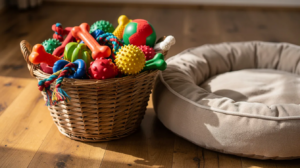
- Keep a basket of toys nearby in each room where the puppy spends time. Include rubber chews, frozen washcloths for sore gums, and food-stuffed toys.
- When the puppy starts to nip hands or clothing, immediately redirect to a chew toy. Using toys instead of hands during play can prevent confused biting behavior.
- Praise and offer verbal praise when the puppy chooses the toy over your skin. This helps reinforce good behavior consistently.
- Offer a tug toy for structured play. You can build touch tolerance gradually while teaching your puppy to play tug safely and mouth gently during tug of war.
Redirect biting behavior to chew toys to prevent injury. Supervise chewing sessions, rotate toys to keep interest high, and check for damage that could become a choking hazard. Avoid very hard objects that might crack developing teeth.
How Structure and Routine Help Reduce Puppy Biting
Puppies that are overtired or overstimulated are more mouthy. A predictable daily routine helps reduce your puppy’s biting fits by keeping energy and rest in balance.
A simple daily rhythm for an 8 to 16 week old puppy might look like this:
| Time Block | Activity |
| Wake up | Potty break, short walk or yard time |
| Morning | Short training or play session, breakfast |
| Mid-morning | Nap in crate or pen |
| Midday | Potty break, brief play, lunch |
| Afternoon | Nap, then short outing or mental stimulation |
| Evening | Training, calm family time, dinner |
| Bedtime | Final potty break, crate for the night |
Many puppies bite more right before naps or during the evening “witching hour.” A puppy temper tantrum at 7 PM usually means the puppy is overtired, not misbehaving. Scheduled quiet time or crate rest prevents meltdown-level nipping.
Puppies need regular, age-appropriate activity to reduce biting behavior, but they should not be pushed into long or intense exercise while they are still growing. Short play sessions, brief leash practice, gentle tug, sniffing time, puzzle feeders, and simple training games are usually better than long walks or nonstop activity. Physical and mental stimulation helps reduce problem behaviors, but rest is just as important. Even a short, calm walk or yard session around Dover or Southern Delaware neighborhoods can help a puppy burn energy and settle down.
What to Do When Your Puppy Bites Hands, Feet, or Clothing
Biting hands, feet, ankles, and loose clothing is one of the most common complaints from dog owners. Here is what to do for each:
Hands: Freeze your hand instead of jerking away. Calmly say your marker (“Too bad”), then redirect to a toy or end the interaction for a short break. Practice gentle hand-feeding with treats to teach the puppy that human skin means good things when the puppy uses a soft mouth.
Feet and ankles: When a puppy grabs at your heels, stop walking immediately. Gently guide the puppy away using a leash or body block, then reward calm walking beside you with treats.
Clothing: Avoid tugging back. Carefully remove the fabric, end the play session, and offer an acceptable tug toy instead.
Children: Supervise all interactions between kids and your puppy. Teach children to stand still “like a tree” when the puppy nips, avoid running or squealing, and never allow children to scold or physically punish the dog. For more strategies, see these training tips for families with kids and dogs.
Puppy Training Skills That Support Better Manners
Early obedience training gives you clear tools to redirect puppy biting into calm, structured behaviors. Bite inhibition training should start as early as possible because bite inhibition helps prevent future biting incidents in adult dogs.
Key skills to teach your puppy:
- Name recognition and recall. A reliable “come” command can interrupt a play session before biting starts and capture your puppy’s attention before excitement escalates.
- Sit and down. These give the puppy a default calm behavior. A puppy who sits for greetings is far less likely to jump and mouth visitors.
- Place command. Sending the puppy to a designated spot teaches impulse control and creates a predictable calm-down routine.
- Leave it. This skill helps prevent grabbing hands, feet, clothing, or dropped objects. Reinforce it with food rewards and consistent practice, and use early marker-based training to build the focus and communication needed for stronger impulse control over time.
Puppies should be rewarded for gentle play to reinforce bite inhibition. Use positive reinforcement to teach bite inhibition effectively. Reward good behavior with treats or verbal praise immediately, within seconds of the good behavior, so the puppy connects the calm action with the reward. Positive reinforcement helps puppies learn desired behaviors far faster than correction alone. Calm behavior training can reduce hyperactivity in puppies over time, making your home more peaceful. Regular, short training sessions build focus and reduce boredom, which lowers biting behavior overall. Consistent obedience training is a lifelong investment in your dog’s manners.
Common Puppy Biting Mistakes to Avoid
Even well-meaning owners can accidentally make puppy biting worse. Here are the most common mistakes:
- Rough wrestling with hands. Rough play teaches the puppy that hands are targets. Keep hands out of the game.
- Letting the puppy chew on fingers “because it’s cute.” What seems harmless at 10 weeks becomes a problem at 60 pounds. Gentle mouthing today becomes a hard bite tomorrow if boundaries are not set early.
- Inconsistent rules between family members. If one person allows nipping while another punishes it, the puppy cannot learn. Everyone must respond the same way.
- Punishing growling. A growl is communication, not defiance. If you punish it, the puppy may skip the warning next time and go straight to a harder bite.
- Yelling or chasing the puppy. Shouting can escalate arousal, and chasing turns biting into a game. Both reinforce the behavior you are trying to stop.
- Giving a toy, attention, or treats immediately after a bite. This accidentally rewards the bite. Wait for a moment of calm, then offer the toy and reinforce good behavior.
Replace these patterns with calm redirection, clear boundaries, and a consistent approach from every person in the household. If a puppy continues to bite despite your best efforts, it may be time for professional guidance.
When Professional Puppy Training May Help
Many families in Dover and Southern Delaware benefit from hands-on help with puppy biting and early manners. Seek professional support if:
- Biting breaks skin or draws blood repeatedly
- The puppy shows serious growling or guarding over food, toys, or people
- Children are being targeted during a puppy’s biting fits
- Biting gets worse despite weeks of consistent home training
- You notice fearful behavior or signs that need a veterinary behavior evaluation
Supervised puppy training can help owners work through biting, early manners, structure, and safe social exposure in a more guided way. For puppies under 5 months, Basic Marker Mastery can help build early focus, reward-based communication, and foundational commands, while Puppy Board & Train focuses on potty training, crate training, bite inhibition, routine, structure, exposure, and early commands for puppies that have completed their final round of vaccinations. For older puppies that meet the age and readiness requirements, Board & Train may help build obedience, manners, recall, leash skills, and calmer behavior around distractions. If biting involves fear, repeated hard bites, guarding, or aggression concerns, a professional evaluation is the safer next step before choosing a program.
If you feel stuck or unsafe with your puppy’s biting, reaching out for a consultation is a practical next step.
Final Thoughts
Puppy biting is normal, but it needs guidance. Gentle redirection, consistent structure, and early training work far better than punishment or rough handling. Every good dog starts as a mouthy puppy who needed patient teaching.
Learning how to stop puppy from biting is not about perfection. It is about progress. Track small wins over several weeks: softer mouthing during a play session, shorter temper tantrum episodes, or your puppy choosing a toy over your hand. Those are signs the training is working.
If biting persists, becomes unsafe, or feels overwhelming for your family, local professional puppy training support in Dover and Southern Delaware is available to help you and your puppy get on track.
FAQs
Here are quick answers to common questions puppy owners ask about biting.
Is puppy biting normal or a sign of aggression?
Most puppy biting is normal play or teething behavior. A playful puppy will have a wiggly, relaxed body and soft mouth during gentle play. Red flags include a stiff body, hard stare, repeated hard bite attempts, or guarding resources. If you see these signs in Dover or Southern Delaware, contact a dog trainer or veterinary behavior professional for assessment.
How do I stop my puppy from biting my hands all the time?
Freeze your hand, calmly mark the bite with a word like “Too bad,” and end the interaction for 10 to 20 seconds. Once the puppy settles, offer a chew toy. Practice gentle hand-feeding with treats so the puppy learns that keeping teeth off human skin earns rewards and helps them learn bite inhibition around people.
Why does my puppy bite more when excited or when guests arrive?
Excitement and overstimulation make self-control harder for puppies, especially during the teething period. Jumping, spinning, and puppy nipping often spike during greetings. Manage these moments by keeping a leash attached, asking for a sit or place command, and allowing guests to interact only after the puppy calms. Tips for handling crowds and events apply to everyday greetings too.
What should I avoid when trying to stop puppy biting?
Avoid yelling, hitting, holding the muzzle shut, alpha rolls, and playing rough hand games that encourage grabbing. Never physically punish a puppy. These methods can create fear and defensive biting, undermining trust. Calm, consistent redirection and clear boundaries are safer and far more effective for building a good dog with lasting manners.
Can puppy training really help with biting and nipping?
Yes. Structured puppy training builds obedience, impulse control, and clearer communication between you and your puppy, which reduces biting over time. Puppies benefit from physical and mental exercise to reduce nipping behavior, and in-person guidance is especially helpful for families who want support with early manners, bite inhibition, and safe interactions with children, other dogs, and visitors.
