

Key Takeaways
- Leash training a puppy is a gradual training process that starts with short, calm indoor sessions and slowly builds toward confident outdoor walks.
- Most puppies pull, freeze, zigzag, or bite the leash at first. These are normal behaviors that can be redirected with structure, routine, and positive reinforcement.
- Core obedience skills like name recognition, sit, recall, place command, loose-leash foundations, and impulse control build the focus that makes calmer puppy walking possible.
- Owners in Dover and Southern Delaware do not have to figure out leash issues alone. Professional puppy training can speed up progress when walks feel stressful or overwhelming.
Introduction
Leash training a puppy is one of the most important skills you will work on together, and it rarely goes smoothly on day one. Whether you are walking past neighbors in Dover, crossing a parking lot in Smyrna, or stepping outside an apartment complex in Southern Delaware, pulling, stopping, and leash biting are part of nearly every pup’s early experience.
This post walks you through the full training process, from the first time your puppy wears a collar or harness to calm, loose leash walking outdoors. Expect some struggle along the way. With patience, supervision, and consistent reward, most puppies can learn polite leash manners faster than owners expect.
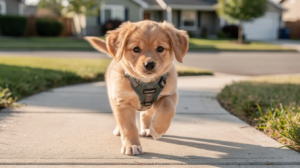
Why Leash Training a Puppy Takes Patience
Puppies under about six months old are still learning about the world, their own bodies, and how to focus on their owners. Walking politely on a leash is not something any dog is born knowing how to do.
Here is why early puppy walking feels chaotic:
- Dogs naturally want to move faster than you, investigate every sniff, and greet people and other dogs.
- A young puppy’s attention span and impulse control are still developing, so focus may come and go from one session to the next. Pulling, zigzagging, and sudden freezing are common early leash behaviors. Some puppies improve within a few weeks of consistent practice, while others need more time depending on age, confidence, distractions, and owner consistency.
- Pulling, zigzagging, and sudden freezing are expected in the early week or two. Leash training can take two to three weeks of daily practice before you see consistent improvement.
Repetition, clear boundaries, and consistent rewards are what slowly turn chaotic behavior into calm leash manners. In busy areas of Dover and Southern Delaware, extra patience is needed because traffic, kids, and wildlife add distractions your puppy has never encountered.
When Should You Start Leash Training a Puppy?
You can start training as soon as you bring your puppy home, often around 8 to 10 weeks of age. Introduce leash training even if your puppy is not fully vaccinated. Indoor and private yard practice is safe right away.
- Public outdoor walks should follow your veterinarian’s guidance based on your puppy’s vaccination status and local disease risk. Many puppies should avoid public areas where unknown dogs walk until about two weeks after the final core vaccine, often around 18 to 22 weeks of age. Before then, indoor sessions, clean private yard practice, and carefully managed exposure can help your puppy build leash confidence safely.
- Break the first two to three weeks into very short, fun leash experiences in the living room, hallway, or fenced yard rather than long street walks.
- Early training builds good habits before the puppy is strong enough to pull hard, which makes later walking much easier.
- Practice leash training daily for two to three weeks for the best results. If you are learning how to leash train a puppy, consistency matters more than session length.
How to Introduce a Collar, Harness, and Leash
Start by choosing safe, well-fitted equipment that prioritizes comfort over heavy control for a very young pup.
- Introduce a flat collar first. Let the puppy wear it for short periods around the house with treats and gentle praise until wearing it feels normal. This also holds your dog’s collar tags for security and identification.
- Fit a Y-shaped harness correctly by checking that two fingers slide under each strap with no rubbing under the armpits. Harnesses reduce strain on a dog’s neck during training, which is especially helpful for puppies still learning leash pressure. Use a front-clip harness for large puppies to help reduce pulling.
- Avoid harsh leash corrections or equipment used in a way that causes fear, pain, or pressure on a young puppy’s neck. If a slip lead is introduced, it should be fitted properly and used with trainer guidance, calm handling, and clear reward-based communication. The goal is not to overpower the puppy, but to help them understand leash pressure safely and calmly.
- Use a lightweight 6-foot leash for training. Clip it on indoors, let the puppy drag the leash inside under supervision, and reward calm behavior so the leash feels neutral, not scary.
- Avoid retractable leashes during training. Retractable leashes can cause injuries and teach inconsistent leash pressure because the length constantly changes.

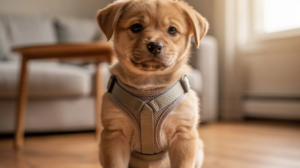
First Indoor Leash Training Steps
Indoor leash walking is the best place to begin, especially before your puppy has full vaccines. Starting leash training indoors helps minimize distractions and lets you control the environment completely.
Here is a simple routine for your first training sessions:
- Keep sessions to about 5 to 10 minutes to match your puppy’s attention span. Use short training sessions to maintain your puppy’s focus.
- Clip on the leash, stand still, and reward any check-ins or moments of loose leash with a treat. Then take a few steps and reward following.
- Use a marker word like “yes” to mark the exact moment the leash is loose or your puppy looks up at you, then deliver a treat. This kind of marker-based training helps your puppy understand which behaviors earn rewards and creates a clearer foundation for leash manners, focus, and early obedience.
- Walk in a corridor or hallway to limit your puppy’s options. Narrow spaces naturally encourage walking in the same direction as the handler.
- If the puppy freezes, do not drag or tighten the leash. Encourage one or two steps forward with a food lure placed just ahead. Letting puppies drag a leash indoors also helps them get used to the feel of it before you add any guidance.
How to Start Outdoor Puppy Walks Calmly
Outdoor environments in Dover and Southern Delaware add new sounds, smells, and movement that can overwhelm a young puppy. The trick is to keep early outings very small and very positive.
- Choose quiet times of day at first, such as early morning on neighborhood sidewalks, rather than busy afternoons near parks or schools.
- Start with very short outings. Walk a few houses down the street and back, or just practice near the front yard or apartment entrance.
- Before stepping out the door, ask for a sit or brief eye contact. Your puppy learns that calm behavior is what lets the walk begin.
- Bring high-value treats specifically for new or distracting locations. Reward whenever the puppy stays near you or checks in instead of staring at distractions. Key practices include starting in low-distraction areas and using high-value rewards.
- Distractions should be gradually increased as the puppy gets more comfortable with walking on a leash. Expand routes slowly over days and weeks rather than jumping straight to a busy park.

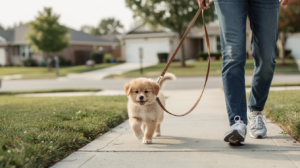
Teaching Loose-Leash Walking to a Puppy
Loose leash walking means your puppy moves beside you with a relaxed, J-shaped leash and no constant tension. It is different from a formal heel, which requires a precise position. Loose leash walking gives your pup room to enjoy the world while staying connected.
- Say a cue like “Let’s go,” take three to five steps, and mark and reward if the leash stays loose. Gradually increase the number of steps between rewards.
- Choose one side, usually left, and consistently reward your puppy for being on that side. This prevents tangling and zigzagging.
- Mix in sits and short pauses to build impulse control. Your puppy learns that walking politely makes the walk continue, while pulling makes it pause.
- Reward your puppy for walking on a loose leash with a treat or praise every time they hold position. This is one of the most important skills for a happy dog on daily walks.
- Progress will be uneven at first. Some days your pup will walk beautifully; other days, everything is a distraction. Daily practice is what makes the big difference over time.
What to Do if Your Puppy Pulls or Bites the Leash
Pulling, freezing, and leash biting are common issues during puppy leash training, especially in new places with lots of stimuli. Leash pulling is a common issue for puppies, and puppies often chew on leashes during training. Neither is a sign that something is wrong with your dog.
- Pulling: If a puppy pulls, stop walking immediately. Wait for slack or a small step back toward you, then mark and reward before you start walking again. This teaches that a short leash with tension leads nowhere, while a loose leash means the fun continues.
- Leash biting: Avoid turning it into a tug game. Keep the leash low and relaxed, offer a toy or treat as an alternative, and only move forward when the mouth is off the leash. Puppies bite the leash out of play, teething, or excitement, and consistent redirection helps them grow out of it.
- Freezing: If your puppy pancakes on the ground, encourage a few steps with a treat trail or move slightly away sideways. Never drag the puppy. Let them choose to follow, and the fear usually fades.
- Consistent, low-drama responses teach your puppy that calm walking earns freedom and treats, while grabbing or pulling the leash pauses everything.
Puppy Training Skills That Support Better Leash Manners
Good leash walking rarely develops in isolation. It is supported by broader obedience skills and impulse control practice.
- Name recognition: When your puppy looks at you on cue, you can redirect attention away from chase triggers, other dogs, or food on the ground during walks.
- Sit, heel, and recall: Practice these on leash in the yard or living room. These are among the most important skills for building focus and responsiveness during real outings.
- Place command: Teaching your puppy to settle on a bed or mat translates to better calmness and self-control in stimulating environments. This is an exercise in patience that pays off outside.
- Leave it command: Helps your puppy ignore dropped food, trash, potty spots, or wildlife on sidewalks. Combined with short impulse control games at the house, it supports steadier behavior outdoors.
- Structured obedience training ties all these skills together, building a foundation that makes every walk smoother.
Common Puppy Leash Training Mistakes to Avoid
Even well-intentioned owners can accidentally teach poor leash habits through inconsistency or frustration. Here are the most common mistakes:
- Using a retractable leash during training, which teaches the puppy that pulling extends freedom. Stick with a standard lightweight 6-foot leash.
- Allowing the puppy to drag you toward every distraction or sniff without any rules about direction and focus.
- Skipping indoor practice and starting directly on busy streets, which increases fear, excitement, and overstimulation.
- Using harsh leash corrections, yelling, or dragging the puppy. These responses can damage trust and even increase reactivity around other dogs. Positive reinforcement through treats or praise is essential for effective training.
- Walking too long. Puppies are not built for marathon outings. Keep walks short, build a clear structure for each outing, and set specific times for sniffing or free exploration so your puppy understands what earns that freedom.
Leash training a puppy requires patience and consistency. If you stay calm and stick to the plan, your puppy will too.
When Professional Puppy Training May Help
Reaching out for help is a smart move that protects your relationship with your puppy. It is not a comment on your ability as an owner.
Consider professional training if you are dealing with:
- Severe pulling that makes you feel unsafe or exhausted on every walk
- Intense fear of going outside, with the puppy too afraid to move
- Barking, lunging, or intense reactions toward other dogs. Puppies may react during walks because of fear, frustration, excitement, overstimulation, or limited experience, so these behaviors should be addressed calmly before they become stronger habits.
- Constant leash biting that you cannot redirect with treats or toys
Local trainers in Dover and Southern Delaware offer structured puppy options that can support obedience, focus, and calmer leash behavior. For puppies under 5 months, Basic Marker Mastery can introduce reward-based training, come, sit, place, slip lead use, loose-leash walking, and early routine. Puppy Board & Train may be an option for puppies that have completed their final round of vaccinations but are still younger than 5 months, with training focused on obedience, routine, structure, exposure, and loose leash manners. A trainer can also coach owners on supervision, practice routines, and safe leash walking around real-world distractions.
If you feel stuck, schedule a consultation before habits become harder to change.
Final Thoughts
Leash training a puppy is a daily practice built on repetition, structure, and calm handling. No puppy figures it all out in a single week. The training process moves through phases: getting comfortable wearing gear, short indoor sessions, first outdoor walks, and eventually reliable loose leash walking that feels natural for both of you.
It is completely normal for puppies to pull, zigzag, or get overstimulated. Indoor practice, short outdoor walks, and clear rules slowly create a happy dog who walks politely and enjoys exploring the community with your family.
If you are an owner in Dover or Southern Delaware who wants help with puppy leash training, impulse control, or early obedience, reaching out for a professional consultation is the best place to begin building calmer, more confident walks for both you and your pup.
FAQs
Below are answers to common questions about leash training a puppy that may not have been fully covered above.
When should I start leash training my puppy?
You can begin gentle indoor leash training as soon as your puppy comes home, typically around 8 to 10 weeks old. Full neighborhood walks can wait until your veterinarian has guided you on vaccinations and safe outdoor exposure. Start with very short, positive sessions in the house so the leash becomes normal long before you tackle busier streets in Dover or Southern Delaware.
How do I stop my puppy from pulling on the leash?
Use a simple rule: stop when the leash is tight and move only when it is loose. This teaches the puppy that pulling does not get them where they want to go. Practice in low-distraction spaces first, then gradually add more challenging environments. Reward your puppy generously any time they walk beside you or check in with eye contact during puppy walking.
Why does my puppy bite the leash during walks?
Leash biting is typically a mix of play, teething, and frustration, especially when puppies are excited or overstimulated. Keep the leash relaxed and low, and offer a toy or treat to redirect the mouth. Avoid turning it into a tug game. Consistent redirection helps most puppies grow out of leash biting as their impulse control improves.
Should I use a collar or a harness for puppy leash training?
Many owners start with a flat collar for identification plus a comfortable, well-fitted harness to reduce neck strain during early leash practice. Y-shaped harnesses typically allow better shoulder movement and are a good choice for growing puppies. Check the fit regularly as your puppy grows, and ask a local trainer or veterinary professional if you are unsure about sizing. Use a front-clip harness to help reduce pulling for larger or stronger puppies.
Can puppy training classes help with better leash manners?
Structured puppy training can help owners make more consistent leash progress by giving them clear steps, supervised practice, and direct feedback on handling. Puppy programs or private guidance may cover early skills like sit, recall, place, loose-leash foundations, and impulse control, while commands such as heel and leave it can be added as the puppy is ready. If you feel overwhelmed by pulling, barking at other dogs, or leash biting, professional guidance can build confidence for both puppy and handler. Check out more posts on building lifelong obedience for tips on what structured training looks like in practice.
