

Key Takeaways
- Puppies jump from excitement and attention-seeking behavior. Any reaction, even yelling or pushing, can keep the habit going.
- One of the most effective ways to stop puppy jumping is to consistently reward four paws on the floor or a sit, and remove all attention when the puppy jumps.
- Structure, leash control, and impulse control skills like sit, place, and recall make calm greetings much easier, especially around guests and new people.
- Clear household rules, supervision, and managing door greetings prevent your pup from practicing unwanted behavior.
- If owners in Dover and Southern Delaware feel stuck, early puppy training support can help build polite greetings in a predictable, structured way.
Introduction
If you have ever wondered how to stop puppy from jumping on people, you are not alone. Picture this: your excited four-month-old pup hears the doorbell, sprints across the house, and launches muddy paws onto your friend’s shirt before anyone can react. It happens fast, and it happens often.
Most owners accidentally reward this behavior without realizing it. Laughing, talking to the puppy, or even pushing them down all count as attention, and attention is exactly what the puppy wants. That is why dogs jump again and again with visitors and family.
This article will explain why puppies jump on people, how to teach calm greetings and four paws on the floor, and give you step-by-step routines for guests, children, and everyday life in a typical Dover or Southern Delaware home.
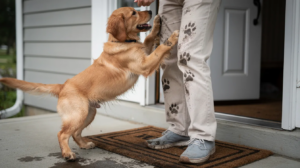
Why Puppies Jump on People
Jumping is one of the most common puppy behaviors. Understanding why it happens makes training far more effective than simply reacting out of frustration.
- Greeting instinct. Puppies often jump because they want to get closer to a person’s face, hands, and attention. For a young dog, jumping can feel like a natural way to greet, connect, and get a response from the people around them.
- Attention-seeking. Dogs jump to get attention from people. Every bit of eye contact, talking, laughing, or pushing teaches the puppy that jumping makes people react.
- Pent-up energy. High-energy puppies are more prone to jumping. A pup who has been resting all day may see a person walking through the door as the highlight of the afternoon.
- Overstimulation. Multiple people arriving at once, kids running, or loud voices increase arousal and make impulse control much harder for a young dog.
- Early patterning. When a 10-week-old puppy jumps and everyone thinks it is cute, the pup rehearses the same behavior that becomes a real problem at eight to twelve months when the dog is bigger and stronger.
- Inconsistent responses. When some family members allow jumping while others yell or push the puppy away, the mixed signals generally make jumping more persistent, not less.
Jumping is often a sign of excitement and lack of impulse control. Recognizing the cause helps you build a calm, structured training plan rather than reacting with frustration.
Is Puppy Jumping Normal?
Yes, puppy jumping is extremely common. In the first six to twelve months, puppies experiment with behaviors that bring them closer to faces, hands, and attention, including jumping, mouthing, and pawing. This is normal development, not a sign that something is wrong.
However, there is a difference between harmless excited puppy bouncing and more concerning patterns like repeated hard body slams, growling, or intense grabbing of clothes. Even normal jumping can be dangerous for young children, older relatives, and visitors who are unsteady on their feet. Jumping can become problematic as dogs grow larger.
Puppies need to learn more appropriate ways to greet people, and early training to keep all four feet on the ground helps them build good manners before they reach full size. In busy households in Dover or Southern Delaware, normal puppy energy combined with lots of visitors or kids’ activities can make jumping feel out of control if there is no plan.
How to Stop Puppy From Jumping on People
Learning how to stop puppy from jumping on people comes down to two things: management and training. Here is how to approach both.
- Manage the environment. Use a leash, baby gate, crate, or exercise pen during high-excitement times so the puppy cannot reach people to jump. Using a leash helps control jumping during greetings and gives you a way to redirect.
- Remove attention for jumping. When your dog jumps, turn away, fold your arms, avoid eye contact, and stay quiet. Dogs learn to stop jumping by receiving no attention for it. Ignoring jumping teaches dogs it does not earn attention.
- Reward four paws on the floor. The moment the puppy stands or sits with paws on the ground, quietly mark it with the word “yes” and deliver a treat or calm praise. Reward calm behavior consistently to reinforce polite greetings.
- Teach a default sit. Teaching sit helps stop jumping behavior because a puppy cannot jump and sit at the same time. Practice sit before meals, before the leash goes on, and before stepping through the door. It is easier to teach dogs what to do instead of what not to do.
- Use a clear replacement cue. Instead of relying only on “no jump,” teach the puppy what to do instead, such as sit or four paws on the floor. A clear replacement behavior gives the puppy a better choice and makes the greeting routine easier to repeat.
- Avoid punishment. Yelling, kneeing, or pushing the puppy often backfires. Positive reinforcement is one of the most useful ways to shape better behavior because it rewards the choices you want repeated, while physical corrections can raise arousal or create confusion.
- Practice in quiet settings. Run five to ten short daily practice sessions in a calm room before applying the same rules during chaotic moments. Consistency in training helps puppies learn effectively.
- Be consistent across the household. Training should be consistent across all family members. If one person allows jumping while another ignores it, the puppy receives mixed signals and progress stalls.
Structure matters too. Predictable routines for walks, play, and rest keep the puppy from being wildly over-aroused when people appear.
Teaching Calm Greetings and Four Paws on the Floor
Calm greetings are trained skills, not automatic. A puppy that jumps on everyone simply has not learned a better option yet.
- Four paws exercise. With the puppy on a leash, approach slowly. If the pup starts to spring up, stop and wait. Only move closer or give attention when all four paws are on the floor.
- Keep the nose low. Pre-load a treat at nose level to encourage the puppy to stay grounded. Slowly move the food to the side so the pup settles into a standing or sitting position rather than leaping.
- Mark the moment. Use a verbal marker like “yes” the instant the puppy chooses to keep paws on the ground while you lean in or reach toward them. Then reward with a treat and calm praise.
- Add mild distractions. Gradually introduce a different person greeting the puppy, stepping through a door, or wearing a hat. This helps the dog learn that the same rules apply everywhere.
- Build duration. Ask the puppy to hold a good sit while you talk briefly, then reward if they stay seated. Teaching dogs to sit can replace jumping behavior over time.
- Visitor greeting position. Once the puppy is calm, visitors can greet from a steady, relaxed position while the owner keeps control of the leash. Some visitors may crouch slightly or offer a hand low, but only if they are comfortable and the puppy is not jumping, mouthing, or crowding their face.
Reward calm behavior consistently to reinforce good manners at every opportunity. For example, you might practice calm greetings in a quiet Dover neighborhood park before trying busier environments.
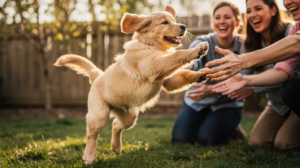
What to Do When Guests Arrive
The front door is where most jumping problems explode. Here is a step-by-step routine for when guests arrive.
- Pre-arrival prep. Leash the puppy before friends or family are due. Have treats ready near the door. Decide whether the pup will hold a sit, go to a place bed, or wait in a separate room at first. Use a leash to control jumping when guests arrive.
- Place command. Send the puppy to a mat or dog bed a few feet from the door. Reward for staying there as guests walk in, and release calmly after the initial excitement passes. This gives the puppy a clear job during door greetings instead of letting them rush visitors.
- Coach your guests. Visitors should ignore jumping puppies until they are calm. Ask them not to talk to, touch, or look at the puppy until all four paws are on the floor and you give the okay to greet.
- Leash greeting. Let the puppy approach guests on leash. Have guests drop a treat low to the ground to encourage nose-down, non-jumping greetings. Practice calm greetings with controlled exposure to guests so the pup builds success gradually.
- Short intervals. Keep greetings to ten to twenty seconds of calm interaction, followed by a break on the place bed or in another room to prevent overstimulation.
- Busy gatherings. During holidays, birthday parties, or summer BBQs, it is kinder to let a young, excited puppy rest in a quiet room with a chew until things settle. Dogs can learn to greet by retrieving a toy instead of jumping, which gives them a job and keeps paws on the ground.
Encourage friends and family to follow the same rules every visit. Inconsistency from strangers and visitors is one of the biggest reasons jumping persists.
How to Handle Jumping on Children and Visitors
Children can be knocked over, scratched, or frightened when a dog jumps, even when the pup means no harm.
- Adults should hold the leash and manage the puppy during all interactions with children, especially young children or any child who is unsure, nervous, or easily knocked off balance.
- Set up a safe greeting routine: puppy in a sit or on place, child stands still with hands low, then drops treats to the floor rather than holding them up high where the puppy would jump.
- If the puppy jumps at a child, the adult calmly moves the pup away, resets the sit, and only allows the greeting again when the puppy is settled.
- Offer alternative outlets for excitement around kids, like fetching a toy or practicing simple obedience games with the family.
- Visitors who are nervous around dogs should never be asked to correct or manage the puppy. The owner stays in control of the leash and the rules.
Consistent, calm practice in real-life settings, such as meeting family in a Dover backyard or at a Southern Delaware gathering, helps build reliable manners over time.
Puppy Training Skills That Support Better Greetings
Good greetings are easier when the puppy already understands basic obedience and impulse control skills.
- Sit. Teach dogs to sit before receiving attention from visitors. Practice sit at doors, before meals, and before getting in or out of the car so it becomes the puppy’s default position instead of jumping.
- Place command. Use a mat or dog bed as a designated calm spot during meals, TV time, and guest arrivals. Obedience training builds lifelong habits that carry over to every greeting.
- Recall. Practicing coming when called helps owners call the puppy away from visitors, children, or new people when arousal gets too high.
- Leash manners. A simple loose-leash walk routine where you stop whenever the puppy lunges or jumps at a person on the sidewalk can prevent jumping from becoming a habit outdoors.
- Impulse control games. Exercises like waiting at thresholds, “leave it,” or brief stays teach the pup to focus and think before reacting, which supports calmer greetings and makes jumping easier to manage.
- Routine and structure. Regular walks, play sessions, training time, and naps throughout a typical day help keep the puppy’s energy balanced. An overtired or under-exercised puppy is far more likely to be jumpy and impulsive.

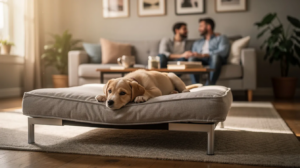
Common Puppy Jumping Mistakes to Avoid
Most owners mean well but accidentally make jumping worse.
- Inconsistent rules. Allowing the puppy to jump on some people but not others makes it impossible for the dog to understand what is expected. The puppy learns faster when the whole family enforces the same rules.
- Pushing or kneeing. This can feel like rough play, can scare sensitive puppies, and still gives attention that may reinforce bad behavior. Training techniques should avoid physical punishment to prevent fear.
- Scolding or yelling. Loud reactions often raise the puppy’s arousal level. What sounds like a correction to you can feel like exciting engagement to the pup, making things worse.
- No management plan. Letting the puppy race to the front door without a leash or plan gives them many chances to rehearse jumping on people.
- Only training during chaos. Practice calm greetings during quiet times, not just when guests arrive and the house is already hectic.
- Underestimating exercise and rest. A puppy who did not get a walk or a nap is far more likely to lose control at the door.
When Professional Puppy Training May Help
Many families need extra support, and there is nothing wrong with asking for help early.
- If your puppy’s jumping has turned into knocking people over, ignoring all cues at the door, or combining jumping with hard mouthing or barking, structured guidance can make a significant difference.
- A trainer can observe your home environment, guests’ routines, and family interactions to identify exactly when and how the jumping is being reinforced.
- Early guidance helps prevent jumping from becoming a long-term habit, especially in medium to large breeds that will be strong adults. For puppies under 5 months, Basic Marker Mastery™ can help introduce reward-based training, come, sit, place, slip lead use, loose-leash walking, and early routine. Puppy Board & Train may be an option for puppies that have completed their final round of vaccinations but are still younger than 5 months, with training focused on obedience, routine, structure, exposure, and early manners.
If you want step-by-step support with calm greetings, four paws on the floor, and everyday puppy manners, reaching out for a consultation is a practical next step.
Final Thoughts
Understanding why puppies jump makes it easier to stay calm, consistent, and fair. When you stop puppies from practicing jumping through management and reward the behavior you actually want, progress becomes easier to see over time.
Knowing how to stop puppy from jumping on people is really about combining management, training, and structure every day. Success depends on rewarding calm behavior, preventing your dog from jumping during high-risk moments, and practicing simple skills like sit, place, and recall. Ignoring jumping behavior helps dogs learn to stay calm, and rewarding good behavior builds the polite greetings you want to see.
Owners in Dover and Southern Delaware do not have to figure it out alone. Professional guidance can help create a clearer plan, improve consistency, and build confidence for both you and your pup.
FAQs
Why does my puppy jump on people?
Puppies jump to greet humans, get closer to faces, and seek attention. Most dogs repeat jumping because any reaction, whether it is laughing, talking, or pushing, can count as attention that reinforces the behavior. Consistent calm responses and clear alternatives like sit, place, or four paws on the floor help the puppy learn a better way to say hello.
How do I stop my puppy from jumping on guests?
Leash the puppy before guests arrive, use a place command or sit at a distance from the door, and ask visitors to ignore the jumping until the pup is calm with all four paws on the floor. Reward sitting or standing calmly before any greeting happens. Encourage short, controlled practice sessions with friends or family so the puppy can experience successful greetings before bigger gatherings.
Should I push my puppy down when they jump?
Pushing, kneeing, or grabbing can feel like rough play to many puppies and still counts as attention, which may reinforce the jumping. Some sensitive puppies become fearful from physical corrections, which creates new problems. Instead, turn away, remove attention completely, and reward calm behavior the moment paws return to the floor.
How can I teach my puppy calm greetings?
Start by approaching slowly on leash and asking for a sit. Reward the puppy when they stay seated as you bend down to pet them. If the puppy jumps, stand up, turn away, and wait for paws on the ground before trying again. Practice in low-distraction settings first, then gradually add new people and environments for more reliable results.
Can puppy training help with jumping and impulse control?
Structured puppy training can support learning by providing clear step-by-step plans and teaching skills like sit, place, recall, and leash manners that make jumping easier to manage. A trainer familiar with your daily routine can identify hidden reinforcements you may be missing. Owners in Dover and Southern Delaware can benefit from local support to build calm greetings, better supervision habits, and everyday puppy obedience.
