
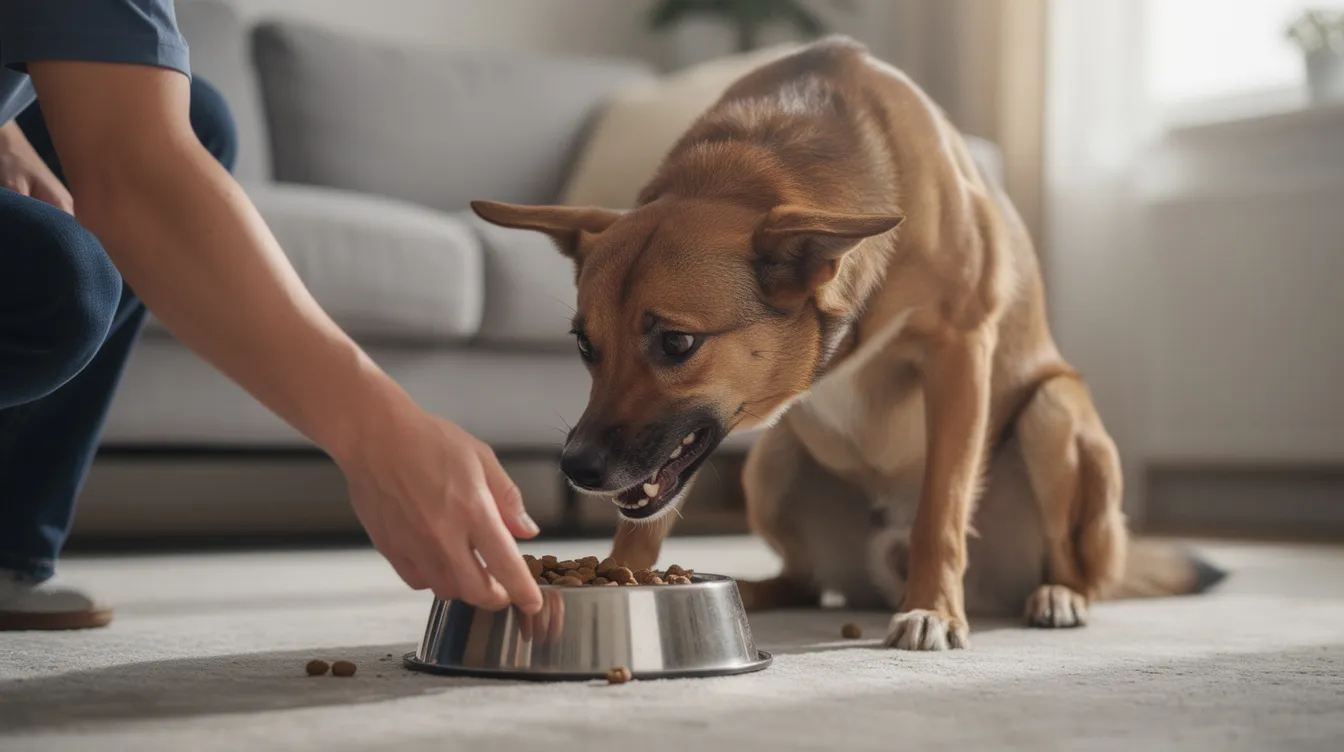
Resource guarding is a defensive behavior in dogs where they protect items they perceive as valuable-food, toys, or territory-from people, other dogs, or other pets. If you’ve noticed your dog stiffening over a food bowl, growling when someone approaches a bone, or snapping when a family member reaches for a toy, you’re dealing with resource guarding behavior that affects many dogs regardless of breed, age, or background.
This guide covers everything dog owners in Dover and throughout Delaware need to know: how to identify guarding signs early, what causes this behavior, which training solutions actually work, and when it’s time to seek professional help. Whether you’re managing an adult dog that recently started guarding or a puppy showing early possessive tendencies, this content is designed to give you a clear, actionable path forward.
Here’s the core answer: resource guarding is a natural but manageable behavior rooted in anxiety-not aggression or dominance. Dogs guard items they perceive as valuable because of evolutionary instinct and past experiences of scarcity. With proper behavior modification techniques like desensitization, counterconditioning, and trade games, most resource guarding issues can be significantly reduced or resolved.
By the end of this guide, you’ll be able to:
- Recognize both subtle signs and overt signs of resource guarding before they escalate
- Understand the psychological and environmental causes behind guarding behavior
- Implement safe, evidence-based training methods including desensitization and trade protocols
- Know exactly when to seek a professional dog trainer or veterinary behaviorist
- Prevent future resource guarding issues in puppies and newly adopted dogs
Understanding Resource Guarding Behavior
Resource guarding is protective behavior over valued items-not a display of dominance or inherent aggression. This behavior is often rooted in anxiety, not aggression. When a dog guards a food bowl or a favorite resting spot, the animal is communicating fear of losing something important, not attempting to assert rank over humans or other dogs. Modern veterinary behavior science, including guidelines from the ASPCA, the American Veterinary Society of Animal Behavior, and the Merck Veterinary Manual, all reject dominance-based explanations in favor of fear- and anxiety-driven models.
Understanding this distinction matters for every household. If you misidentify guarding as dominance and respond with force or punishment, you risk making the behavior worse-and more dangerous. Recognizing resource guarding for what it is keeps your family, your dog, and any other pets safer.
What Dogs Typically Guard
Dogs can develop resource guarding around virtually anything they consider valuable, and what’s high value to one dog may be insignificant to another. Resource guarding can include food, toys, or territory, but the list extends further than most owners expect:
- Food-related items: Meal bowls, treats, high-value chews like bully sticks, rawhides, and even scraps dropped on the kitchen floor. Food is the most commonly recognized trigger, but dogs also guard water bowls and feeding stations.
- Toys, bones, and stolen household items: A squeaky toy, a bone, a stolen sock, or even a remote control grabbed from the couch-if a dog assigns it value, it can become a guarded resource. Research from a five-year shelter assessment found that possession guarding was actually more common than food guarding, with 83.6% of resource guarders displaying behavior during possession tests.
- Sleeping areas, favorite spots, and territory: Crates, beds, couches, and specific corners of rooms can all trigger protective responses. A guarding dog may growl or block access when a person or another animal approaches their resting area.
- Human family members and attention: Some dogs guard favorite people, positioning themselves between their preferred person and other household members. This form of guarding can look like protecting but carries the same anxiety-driven roots.
The connection across all these categories is perceived value from the dog’s point of view. A dog doesn’t need to be eating or chewing to guard-simply being near something it values can activate the behavior.
The Psychology Behind Guarding
Resource guarding is instinctual and learned behavior. From an evolutionary perspective, domesticated animals descended from wild canids-including feral dogs and wolves-that needed to defend food and den sites to survive. Dogs with limited early food access may guard resources more intensely because their history taught them that access to food or valued items isn’t guaranteed.
But evolution only sets the stage. A dog’s individual learning history and environment shape guarding intensity significantly. Environmental conditions can increase resource guarding behavior: dogs raised in shelters with competition, puppies from large litters with limited feeding stations, or animals that experienced unpredictable access to resources are all more likely to guard. Reinforcement history maintains resource guarding over time-if guarding successfully keeps humans or other dogs away from a resource, the behavior strengthens through negative reinforcement.
A functional analysis study published in the Journal of Applied Behavior Analysis demonstrated that resource guarding behavior is often maintained by multiple factors simultaneously: the tangible reward of keeping the resource, escape from the approaching threat, and even attention from the owner. This complexity is why simplistic “just take it away” approaches fail-and why understanding the psychology behind guarding is essential before attempting any training intervention.
Recognizing Resource Guarding Signs
Now that you understand what drives guarding behavior, the next critical skill is learning to read your dog’s communication. Dogs always signal before they escalate-the problem is that humans often miss or misinterpret early dog body language. Early signs of resource guarding include freezing and hard staring, and recognizing these signals is your best tool for preventing bites and intervening safely.
Early Warning Signs
The earliest indicators of resource guarding are subtle signs that many owners overlook:
- Body stiffening and freezing: Dogs may stiffen their body over an item, stopping all movement when a person or animal approaches. The dog becomes rigid, often leaning slightly forward over the guarded resource. This freeze response is one of the most reliable early indicators.
- Hard stare and whale eye: A hard stare can indicate resource guarding behavior. Showing “whale eye”-where the whites of the eyes become visible as the dog turns its head slightly away while keeping its gaze locked on the perceived threat-is a classic warning sign that many owners mistake for a casual look.
- Eating faster or hovering: When a dog accelerates its eating speed as someone approaches, or hunches protectively over a chew or toy, it’s communicating discomfort. Carrying items into corners or isolated areas is another early signal.
- Subtle positioning and blocking: The dog may shift its body between the resource and the approaching person or animal, creating a physical barrier without any vocalization. This blocking behavior is easy to miss but represents genuine guarding.
These behaviors deserve respect and attention even though they don’t involve growling or biting. They are your early warning system.
Escalated Guarding Behaviors
Resource guarding can escalate to aggressive behavior if unchecked. When a dog’s early warnings are ignored-or worse, punished-the behavior ladder climbs:
- Growling, lip lifting, and baring teeth: Lifting lips and low growling signal resource guarding, while baring teeth is a more overt sign of resource guarding. These vocalizations and displays are the dog’s attempt to create distance without physical contact. They should never be punished.
- Snapping and air biting: The dog snaps its teeth in the direction of the perceived threat without making contact. This is a deliberate warning-a controlled display meant to communicate “back away” without causing injury.
- Actual biting and aggressive contact: When warnings are suppressed through punishment or consistently ignored, dogs may escalate to biting. Punishing a dog for growling can increase anxiety and worsen guarding behavior because the animal learns that warnings lead to punishment, so it skips straight to biting. This is one of the most dangerous outcomes of punishment-based approaches and arguably the worst thing an owner can do when managing possessive aggression.
Situational Triggers
Certain circumstances predictably increase guarding responses. In multi-dog households, competition over resources intensifies guarding-particularly during feeding time or when high-value items like bones or long-lasting chews are available. Dogs that coexist peacefully most of the day may show aggressive behaviors when a valued resource enters the picture.
Children present a particularly dangerous trigger. Research from a veterinary behavior clinic study found that 44% of bites to children under six were related to food or resource guarding, and 61% of dogs referred for child-directed aggression displayed resource guarding as a stimulus. Young children move unpredictably, reach for items without warning, and don’t recognize the subtle signs that precede a bite.
Other triggers include illness, pain, or hunger; changes in household routine; new pets or people entering the home; and any situation where the dog perceives its access to a resource as threatened. Resource guarding can develop in adult dogs unexpectedly, sometimes triggered by environmental changes or underlying medical issues.
Professional Training and Management Solutions
With a clear understanding of what resource guarding looks like and what triggers it, the focus shifts to what you can actually do about it. The good news: evidence-based training methods produce reliable results. The key is using the right approach, at the right pace, with consistent environmental management to support the process.
Desensitization and Counterconditioning Protocol
Desensitization and counterconditioning (DS/CC) is the gold-standard treatment recommended by major professional organizations, including AAHA and the AVSAB. This approach works by changing your dog’s emotional response to someone approaching a guarded resource-from threat to positive anticipation through positive reinforcement.
Here’s the step-by-step protocol:
- Start at a safe distance where your dog shows no guarding signs. Identify the threshold-the distance at which your dog remains relaxed while eating or holding a resource. This might be ten feet or three feet, depending on severity.
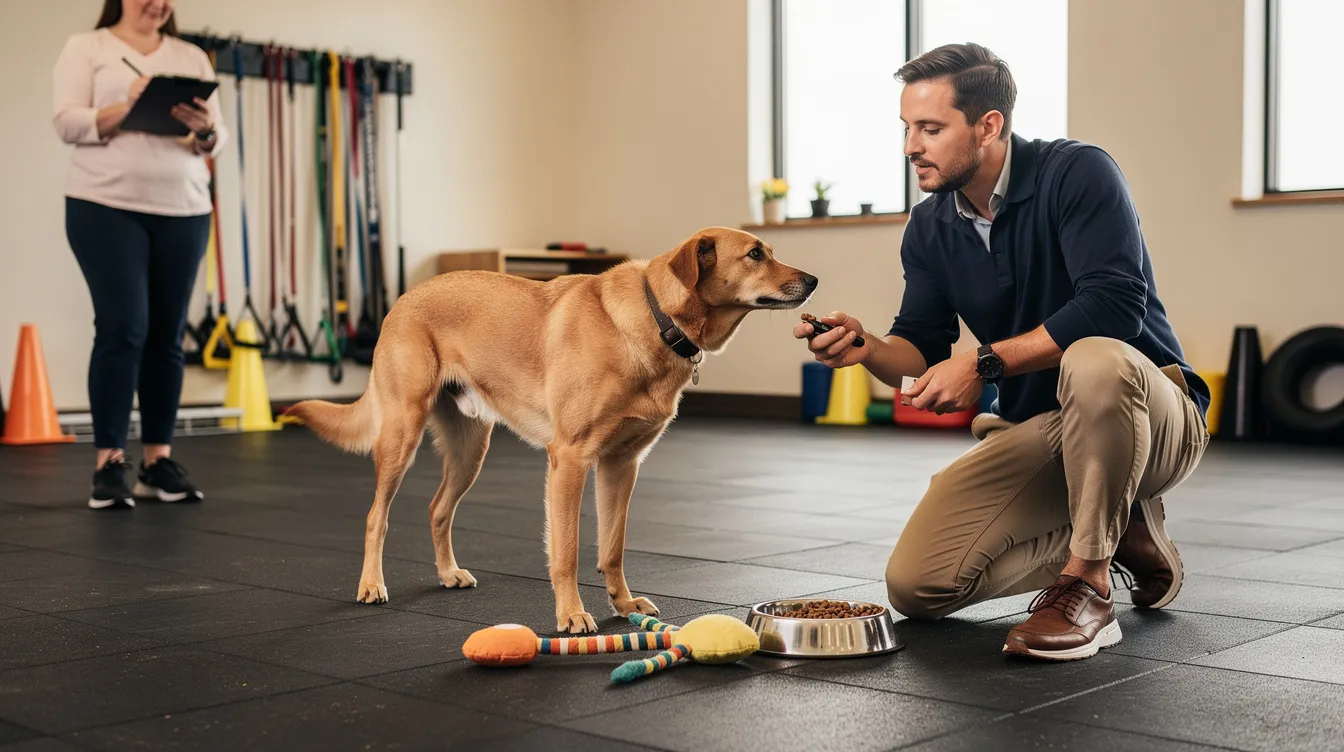
- Toss high-value treats while your dog has the guarded item. From your safe distance, toss treats that are more valuable than the guarded resource. Desensitize dogs by tossing treats near guarded items. The dog begins associating your approach with receiving something better.
- Gradually decrease distance over multiple sessions. Move closer by inches over days and weeks, never pushing past the point where the dog shows any guarding behavior. Each session should be short-5 to 15 minutes-and end on a positive note.
- Practice “drop it” and “leave it” commands with positive rewards. Teach a strong “drop it” cue during play, starting with low-value items and building to higher-value ones. The dog must learn that releasing a resource leads to something better, not loss.
- Implement trading games for voluntary resource exchanges. Use trade games to encourage item surrender. Offer something higher-value in exchange for the guarded item, then return the original item when possible. This builds trust and teaches the dog that giving things up is safe and rewarding.
A case study documented on Paws & Tales illustrates this progression: “Buster,” a Jack Russell mix with food bowl guarding, progressed over six weeks of daily DS/CC sessions from guarding at several feet away to allowing his owner to stand beside and touch the bowl without any guarding response.
Training Method Comparison
| Criterion | Positive Reinforcement (DS/CC, Trade Games) | Punishment-Based / Dominance Methods |
|---|---|---|
| Scientific Support | Supported by AAHA, AVSAB, Merck Manual | Discredited by modern behavioral science |
| Effect on Warning Signals | Preserves the warning ladder (growl → snap → bite) | Suppresses warnings; dog may bite without warning |
| Emotional Impact on Dog | Reduces fear and anxiety over time | Increases fear, erodes trust |
| Bite Risk | Decreases with consistent application | Increases-sudden, unpredictable aggression |
| Long-Term Effectiveness | Addresses root cause (emotional response) | Suppresses symptoms only; behavior often returns |
| Suitability for Households with Children | Recommended for all households | Contraindicated, especially with children |
The comparison is clear: avoid forcefully taking items to prevent guarding behavior. Punishment, force, and dominance-based corrections don’t stop resource guarding-they suppress the warning signs that keep people safe and increase the risk of sudden, dangerous biting.
Environmental Management Strategies
Training alone isn’t enough. Environmental management creates the conditions where training can succeed and prevents guarding incidents during the behavior modification process:
- Remove access to high-value items during training. Remove access to high-value items during training phases. Put away bones, antlers, and high-value chews until your dog’s response to trade games and DS/CC is reliable. This isn’t permanent-it’s strategic.
- Feeding separation in multi-dog households. Feed dogs in separate rooms or use baby gates to create physical barriers between eating areas. Eliminate competition at meal times entirely.
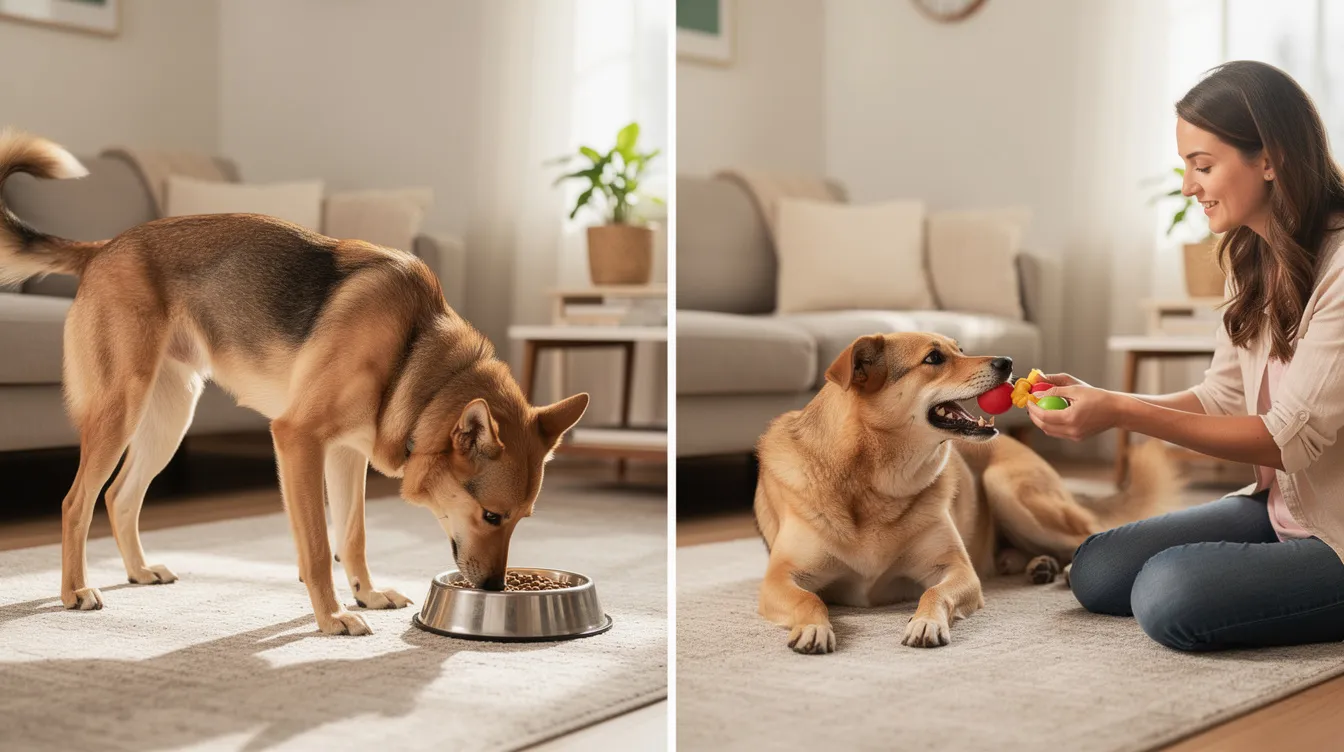
- Creating safe spaces and predictable routines. Dogs guard less when they feel secure. Use crates as positive retreats (see our guide on crate training with a positive approach), maintain consistent feeding schedules, and ensure your dog has a designated space where it won’t be disturbed. Managing the environment can help prevent resource guarding incidents.
Common Challenges and Solutions
Even with solid knowledge and the right training methods, specific situations create unique difficulties. Here are the most frequent challenges dog owners face with resource guarding and how to address them.
Guarding From Children
Children under six are at the highest risk during resource guarding incidents. The veterinary behavior clinic data is sobering: nearly half of child-directed bites in the study involved resource guarding. Children move quickly, grab without warning, and cannot read dog body language.
Immediate management is essential: use physical barriers like baby gates between dogs and young children during feeding and chew time. Never leave children unsupervised with a dog that has any history of guarding. Teach children, age-appropriately, to never approach a dog that is eating, chewing, or holding a toy. For families navigating the intersection of child safety and dog behavior, our guide on training tips for families with kids and dogs provides additional strategies.
Multi-Dog Household Competition
When multiple dogs share a household, resource guarding issues often intensify. A dog that shows no guarding around humans may guard aggressively from other dogs-food, sleeping spots, toys, and even access to favorite people.
The solution starts with separation: feed dogs in separate rooms, provide individual chew time behind closed doors or gates, and ensure each dog has its own resting area. A documented case study of “Luna,” a Golden Retriever in a multi-dog home, showed successful behavior modification over several weeks by gradually reintroducing dogs at increasing proximity during structured feeding sessions while using DS/CC protocols.
Sudden Onset Guarding in Adult Dogs
When an adult dog that has never guarded suddenly begins protecting resources, the first step is a veterinary evaluation. Seek veterinary advice for sudden resource guarding behavior. Research indicates that approximately 50% of dogs referred for aggression-related behaviors had identified or suspected medical conditions-including pain, hormonal changes, and neurological issues-that contributed to their behavior. An underlying medical issue can lower a dog’s threshold for guarding dramatically, and no amount of training will resolve behavior driven by untreated pain or illness.
After medical causes are ruled out, a professional behavior assessment can identify environmental or social changes that may have triggered the new behavior and create a customized training plan.
Failed DIY Training Attempts
Many dog owners attempt to stop resource guarding on their own before seeking help. DIY approaches commonly fail when progress is rushed past the dog’s comfort threshold, application is inconsistent, the environment isn’t managed properly, or punishment is used to suppress warning signals.
When to transition to professional help:
- Your dog has bitten or broken skin during a guarding incident
- Guarding has generalized across multiple resource types (food, toys, spaces, people)
- You’ve followed DS/CC protocols consistently for several weeks without improvement
- Your household includes children, elderly family members, or other vulnerable people
- You feel unsafe managing the behavior on your own
Early professional help can prevent resource guarding from escalating. In severe cases, a certified veterinary behaviorist or experienced dog trainer can provide the structured intervention that keeps everyone safe. Behaviorists can provide unbiased assessments for guarding dogs, identifying maintaining factors that owners often miss. Professional guidance can help modify resource guarding behavior more efficiently than trial-and-error approaches.
In a functional analysis study, a single dog’s food guarding was treated through tailored operant conditioning that addressed multiple maintaining functions. The guarding behavior dropped to zero and remained suppressed after two weeks without training, even with novel handlers and high-preference treats-demonstrating what structured professional intervention can achieve.
Conclusion and Next Steps
Resource guarding is one of the most common behavior challenges dog owners face-shelter assessments show that 7–30% of dogs display guarding behaviors-but it is manageable with the right approach. The foundation is understanding that this behavior comes from fear and anxiety, not dominance. The solution combines gradual desensitization and counterconditioning, trade-up games, reliable cue training, and consistent environmental management.
Here are your immediate action steps:
- Assess your current situation. Identify which resources your dog guards, who the guarding is directed toward, and where your dog falls on the warning ladder (subtle signs vs. biting).
- Implement basic management today. Remove high-value items that trigger guarding, feed pets separately, use baby gates to create safe zones, and supervise all interactions between your dog and children.
- Begin DS/CC and trade games at a distance and intensity where your dog remains relaxed. Keep sessions short, use high-value treats, and never punish growling or other warning signals.
- Contact a professional trainer if your dog has a bite history, guards from children, or shows no improvement after consistent effort. Off Leash K9 Training of Dover offers a free phone consultation to evaluate your dog’s situation and recommend the right training path-whether that’s private dog training sessions, a behavior consultation, or a structured board-and-train program.
If you’re also working on foundational skills, explore our resources on obedience training as a lifelong journey or our online puppy training course to build the kind of communication and trust that prevents behavior problems from developing in the first place.
Additional Resources
- Emergency safety protocols: If your dog is actively guarding and showing aggressive behaviors, do not reach for the item. Leave the area, give the dog space, and contact a professional. Never attempt to physically overpower or punish a guarding dog-this increases bite risk dramatically.
- Recommended management equipment: Baby gates, crates, puzzle feeders, treat pouches, and a variety of high-value treats at different levels (kibble, cheese, boiled chicken) for trade games and DS/CC sessions.
- Professional behavior consultation: Off Leash K9 Training of Dover specializes in resource guarding issues and aggressive behaviors. View our plans and pricing or call for a free phone consultation to discuss your dog’s specific situation and get started on a customized training plan.
