

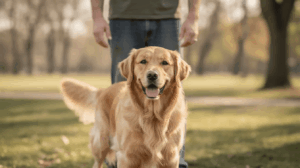
Dog calming signals are subtle behaviors that may appear when a dog feels uncomfortable, uncertain, or under social pressure. Yawning, lip licking, turning away, sniffing the ground, freezing, and other behaviors can occur in these situations, but none should be interpreted in isolation.
The term “calming signals” was popularized by Norwegian dog trainer Turid Rugaas through her work on canine body language. Her book On Talking Terms with Dogs: Calming Signals describes more than 30 behaviors she interpreted as part of canine social communication. Today, similar behaviors may also be described in veterinary and behavior literature as stress, appeasement, displacement, or avoidance signals, so their meaning should be considered in context.
For dog owners in Dover and Southern Delaware, learning to recognize these signals can help you notice when an interaction needs more space, less pressure, or a different approach. Understanding body language does not diagnose a dog’s emotional or medical condition, so persistent or sudden behavior changes should be discussed with a veterinarian.
By the end of this guide, you will understand:
- Which behaviors are commonly associated with calming or appeasement signals
- Why context matters when interpreting dog body language
- How to respond when your dog appears uncomfortable
- Which behaviors should be treated as stronger warning signs
- When professional training or veterinary guidance may be appropriate
What Are Dog Calming Signals?
“Calming signals” is a commonly used training term for behaviors that may occur when dogs are experiencing social pressure, uncertainty, or discomfort. Common examples include looking or turning away, lip licking, yawning, sniffing the ground, slowing down, and raising a paw.
Research has provided some support for the idea that certain behaviors may function as appeasement signals, but the science is more nuanced than treating every yawn or lick as a deliberate message. A 2017 study of 116 dogs found that lip licking and looking away may serve as appeasement signals during dog-human interactions. The researchers also noted that context mattered and that dogs showed fewer of these signals during more severe threats.
A separate pilot study observed 24 dogs during controlled dog-dog encounters and recorded 2,130 behaviors classified as calming signals. Head turning, nose licking, freezing, and turning away were among the most frequently observed behaviors. The signals occurred more often during interactions with unfamiliar dogs, suggesting that context influenced their use. The researchers described the work as a pilot study examining whether these behaviors have communicative and de-escalating functions, so the findings should not be treated as proof that every behavior has one fixed meaning.
Why Context Matters
A single behavior rarely tells you everything about how a dog feels. Consider what happened immediately before the behavior, the dog’s overall posture, the environment, and what happens next.
A yawn after a nap is ordinary. A yawn while a stranger leans over the dog may deserve more attention. A dog sniffing a patch of grass during a normal walk may simply be investigating a scent. The same sniffing behavior during a tense interaction may occur alongside other signs of discomfort.
Look for patterns rather than assigning a fixed translation to each movement.
Calming Signals vs. Warning Signals
Not every stress-related behavior is a calming signal. Whale eye, a stiff body, hard staring, growling, snapping, or attempts to escape should be taken seriously as signs of increasing discomfort or arousal.
Whale eye, when the whites of a dog’s eyes become visible, can indicate stress, fear, or discomfort, particularly when it appears with other changes in body language. It should be interpreted alongside posture, ears, tail position, and the situation rather than assumed to mean that earlier calming signals were ignored.
A growl is not a calming signal. It is a warning communication that may indicate discomfort, fear, guarding, pain, or another concern. Take it seriously, give the dog appropriate space, and look for the reason behind the behavior rather than punishing the warning itself.

Common Dog Calming Signals
Lip or Nose Licking
A quick tongue flick across the lips or nose can occur when a dog is uncomfortable, uncertain, or under social pressure. It can also happen around food or for other ordinary reasons, so look at the context.
If your dog repeatedly licks its lips when someone reaches over its head, during handling, or when another dog approaches, consider increasing distance and reducing pressure.
Yawning
Dogs yawn for normal reasons, including fatigue, but yawning can also occur during stressful or unfamiliar situations.
Notice when the yawning happens. A dog yawning repeatedly during a veterinary visit, unfamiliar interaction, or difficult training exercise may be experiencing discomfort or heightened arousal. Do not assume that every yawn means stress.
Looking or Turning Away
Turning the head or body away can reduce direct social pressure. You may notice it when a person approaches too closely, when two dogs meet, or when a dog is being handled.
If your dog turns away while someone is trying to pet it, pause and give the dog an opportunity to move away or re-engage.
Research involving dog-human interactions has found that looking away and lip licking may function as appeasement signals in some contexts.
Sniffing the Ground
Sniffing is a normal and important part of how dogs explore their environment. It can also appear during moments of uncertainty or social pressure.
The useful question is not whether sniffing always means stress. It does not. Instead, ask why the behavior appeared at that moment and whether it occurs alongside other changes in body posture or movement.
Slow Movement
A dog may slow down when it feels uncertain or uncomfortable. Slow movement can also have many ordinary causes, so consider the full situation.
If your dog slows down, turns away, lowers its body, or repeatedly avoids an approaching person or dog, create more space instead of forcing the interaction.
Freezing
Freezing or suddenly becoming very still can be a sign of significant stress or uncertainty. It should not automatically be treated as stubbornness.
If your dog freezes, stop increasing the pressure. Give the dog space and evaluate what caused the response. If freezing occurs frequently or is paired with stiff posture, growling, snapping, or attempts to escape, seek professional guidance.
Purdue’s canine body-language guidance also identifies freezing and other stress-related behaviors as useful information when determining whether a dog may be uncomfortable.
Raised Paw
A raised paw can occur when a dog is uncertain, but it also has other meanings depending on breed and context. For example, pointing breeds may raise a paw while showing hunting or pointing behavior.
Treat a raised paw as one piece of information rather than a complete interpretation of the dog’s emotional state.
Walking in a Curve
Dogs may use curved approaches during social interactions, and a curved path can reduce the direct pressure created by a head-on approach. However, not every curved movement is a calming signal, so the behavior should be considered alongside the rest of the interaction.
If two dogs appear uncomfortable, avoid forcing a straight-line greeting. Increasing distance and allowing both dogs more choice can reduce pressure.
Shake-Offs and Other Behaviors
Dogs naturally shake after getting wet, but a full-body shake can also appear after an exciting or stressful event. Scratching, sneezing, panting, or other behaviors may likewise have multiple explanations.
These behaviors are useful clues only when considered alongside the environment, timing, and the dog’s overall body language.
Reading the Whole Dog, Not One Signal
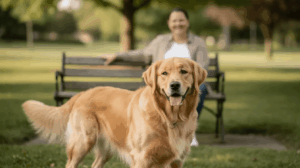
The safest way to interpret dog body language is to look at the whole picture.
Pay attention to:
- Body posture and weight distribution
- Tail position and movement
- Ear position
- Eye shape and gaze
- Mouth and facial tension
- Movement and distance
- What happened immediately before the behavior
- Whether several signals appear together
For example, a dog that turns its head away while maintaining a loose body may be asking for less direct interaction. A dog that turns away while also showing whale eye, a stiff body, tucked tail, or attempts to escape may be experiencing greater stress.
AKC guidance similarly emphasizes interpreting body language as a complete picture rather than relying on one behavior.
Purdue’s canine body-language guidance also recommends paying attention to overall posture and behavior when assessing whether a dog is comfortable.
Dog Calming Signals at Home
Dogs can show stress-related body language during ordinary household interactions.
Around Children
Children should learn that dogs have boundaries. If a dog turns away, moves away, freezes, licks its lips, or otherwise appears uncomfortable, the interaction should pause.
Do not allow children to hug, climb on, corner, or repeatedly handle a dog that is trying to create distance. Give the dog a safe area where it can rest without being disturbed.
The goal is not to teach children to fear dogs. It is to teach them to recognize when a dog wants space.
Around Visitors
Visitors may approach dogs directly, lean over them, stare at them, or reach for their heads. Some dogs tolerate these actions, while others become uncomfortable.
If your dog turns away or repeatedly licks its lips when a visitor approaches, ask the visitor to slow down and give the dog more space. Let the dog choose whether to approach.
Around Food, Toys, or Resting Areas
A dog may show discomfort when someone approaches its food, toy, bed, or resting space. Do not assume that a calming signal means the dog is ready to interact.
If body language becomes tense, increase distance and avoid confrontation. Growling, freezing, hard staring, or snapping should be treated as stronger warning signs.
Dog Calming Signals on Walks
Walks expose dogs to people, other dogs, vehicles, bicycles, noises, and unfamiliar environments.
If your dog sees another dog and begins turning away, sniffing, slowing down, or trying to increase distance, do not assume it needs to greet the other dog. Instead, create additional space and observe whether the dog’s body becomes more relaxed.
Avoid forcing greetings between dogs that appear uncomfortable. A wider path, a turn away from the trigger, or a short pause can be a better choice than closing the distance.
What About Leash Reactivity?
Calming or stress-related signals can appear in dogs that struggle with leash interactions, but they do not by themselves explain why a dog is reactive. Reactivity can have multiple causes and should be evaluated based on the individual dog and situation.
A dog that looks away or sniffs the ground may be uncomfortable without being dangerous. If those signs progress to stiff posture, hard staring, barking, lunging, snapping, or attempts to escape, the situation requires more careful management.
The earlier you notice a change in body language, the more opportunity you have to reduce pressure and prevent the situation from becoming harder to manage.
Dog Calming Signals During Training
Training should be adjusted when a dog repeatedly shows signs of discomfort.
If your dog starts yawning, looking away, sniffing, freezing, or disengaging during an exercise, consider whether:
- The task is too difficult
- The environment is too distracting
- The session has gone on too long
- Your handling is creating unnecessary pressure
- The dog may be experiencing pain or another physical problem
Make the exercise easier rather than simply repeating the cue more loudly. Shorter sessions, greater distance from distractions, and clearer criteria can make practice easier for the dog to understand.
Dog obedience training in Dover, DE is available for owners who want structured instruction around obedience, communication, and related training goals. The current service page states that program recommendations are based on factors such as the dog’s age, temperament, behavior challenges, and training goals.
How to Respond When You See a Calming Signal
When you notice a possible calming or stress-related signal, the goal is to understand what is happening and reduce unnecessary pressure.
1. Pause
Stop the interaction or exercise long enough to observe your dog.
2. Create More Space
Move away from the trigger or allow your dog to move away when it is safe to do so.
3. Reduce the Pressure
Turn your body slightly away, avoid looming over the dog, and simplify the interaction.
4. Watch for Changes
A dog that becomes looser, resumes normal movement, or chooses to re-engage may be more comfortable. If signs become stronger or continue, increase distance or end the interaction.
5. Do Not Punish Communication
Do not punish a dog for growling or displaying discomfort. Treat these behaviors as information that the dog is struggling with the situation.
AKC guidance recommends identifying stress triggers, reducing pressure when possible, and taking warning behaviors seriously rather than simply suppressing them.
When Calming Signals Need Professional Attention
Occasional signals are not necessarily a reason for concern. However, repeated or intense behavior deserves attention when it occurs in predictable situations or begins interfering with everyday life.
Consider professional help if your dog:
- Repeatedly freezes or tries to escape
- Shows frequent growling, snapping, barking, or lunging
- Cannot remain comfortable around people or dogs
- Becomes increasingly difficult to handle
- Shows sudden behavior changes without an obvious environmental explanation
A veterinarian should be involved when a behavior change may be related to pain or illness. Professional dog training can help with obedience, handling, and behavior-management goals when the issue is appropriate for training.
For Dover and Southern Delaware owners, a free phone consultation can provide an opportunity to discuss your dog’s behavior and training goals before selecting a program.
Common Misconceptions About Dog Calming Signals
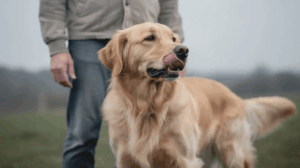
“Every Yawn Means My Dog Is Stressed”
Not necessarily. Dogs yawn for many reasons. Context is essential.
“A Dog That Turns Away Is Being Stubborn”
Looking away can occur when a dog is uncomfortable or trying to reduce social pressure. It should not automatically be interpreted as defiance.
“A Wagging Tail Means My Dog Is Happy”
Tail movement reflects arousal, not one specific emotion. Look at the entire body, including posture, ears, eyes, and mouth.
“Growling Means My Dog Is Aggressive”
Growling is a warning communication that can occur because a dog is uncomfortable, afraid, guarding something, or experiencing pain. It should be taken seriously rather than punished.
“Calming Signals Are a Fixed Dictionary”
The term is useful, but individual behaviors do not have one universal translation. The same action can have different meanings depending on context.
Frequently Asked Questions About Dog Calming Signals
What are the most common dog calming signals?
Common behaviors described as calming or appeasement signals include lip or nose licking, yawning, looking or turning away, sniffing the ground, slowing down, freezing, raising a paw, and curved movement. Context matters because many of these behaviors can also occur for ordinary reasons.
Is whale eye a calming signal?
Whale eye is better treated as a stress- or fear-related body-language sign rather than a calming signal. When the whites of a dog’s eyes are visible, especially with a stiff body, tucked posture, or other signs of discomfort, give the dog more space and assess the situation.
Should I stop petting my dog when it turns away?
If your dog turns away while you are petting or approaching, pause and allow the dog to move away or re-engage. Looking away can be an indication that the dog wants less direct interaction, although the meaning depends on the rest of the dog’s body language.
Can calming signals mean my dog is aggressive?
No. Calming or stress-related signals do not automatically mean a dog is aggressive. They can indicate uncertainty, discomfort, or an attempt to avoid conflict. More serious warning signs include stiff posture, hard staring, growling, snapping, lunging, or attempts to escape.
When should I contact a trainer or veterinarian?
Contact a veterinarian if a behavior change is sudden, persistent, or could be related to pain or illness. A qualified trainer may be helpful when repeated stress signals, reactivity, handling difficulties, or obedience problems are interfering with daily life.
Conclusion
Dog calming signals can give owners useful information about how a dog is responding to an interaction, but they should never be treated as a simple one-behavior dictionary. Yawning, lip licking, turning away, sniffing, freezing, and other behaviors can have different meanings depending on context.
Watch the entire dog, identify what happened before the signal, and look for patterns. When your dog appears uncomfortable, reduce pressure, create distance, and give the dog a chance to recover.
For dog owners in Dover and Southern Delaware who want help understanding behavior or improving obedience, Off Leash K9 Training Southern Delaware offers a free phone consultation. You can also review current training information and Plans & Pricing before deciding what type of support fits your dog.
Additional Resources
- American Kennel Club: How to Read Dog Body Language
- Purdue University Center for Animal Welfare Science: Canine Body Language
- Mariti et al.: Pilot Study on Calming Signals in Dogs
- Firnkes et al.: Appeasement Signals in Dog-Human Communication
These resources reinforce an important principle: dog body language should be interpreted in context, with attention to the dog’s complete posture and the situation rather than one isolated movement.
