Teaching a dog to come when called is one of the most important safety skills you can build, and it can be challenging to maintain around real-world distractions. If your dog bolts out the front door, ignores you at the park, or only responds when you have a treat in your hand, this guide explains how to build recall step by step.
A reliable recall means your dog responds to your cue and comes toward you consistently under the conditions you have trained. Many dogs can learn recall with structured practice, appropriate rewards, and gradual exposure to distractions, although the difficulty and reliability will vary from dog to dog. Recall is a skill that develops through repetition and reinforcement.
This guide focuses on everyday situations for Dover and Southern Delaware dog owners, including practice at home, in yards, and in appropriate outdoor settings. It covers the progression from your first indoor recall exercises to controlled practice around distractions.
If you are a dog owner in Dover or Southern Delaware struggling with a dog that will not come when called, the first step is understanding how recall is learned and then building the behavior gradually.
Recall matters because it can improve your ability to move your dog away from traffic, wildlife, other dogs, and other hazards. It can also give owners more options for safe off-leash activity in appropriate enclosed settings. No recall is perfect, so dogs should still be managed carefully around significant hazards.
Here is what you will learn:
- What reliable recall means and how dogs learn the behavior
- How to choose and protect a recall cue
- Which rewards and training tools can help
- How to progress from indoor practice to outdoor distractions
- How to troubleshoot common recall problems
- When professional dog training may be useful
Understanding Reliable Recall
Recall is your dog’s response to a cue that tells them to return to you. It is an important obedience and safety behavior because it can help you regain control when your dog is moving away from you.
Reliable recall is built in stages. A dog may respond well in the living room but struggle in the backyard, at a park, or around another dog. That does not necessarily mean the dog is refusing to learn. It may simply mean the behavior has not been practiced at that level of distraction.
The goal is not to expect perfect performance immediately. Instead, build a response in manageable environments and gradually increase distance and distractions as your dog becomes more consistent.
What “Come When Called” Really Means
A useful recall means your dog responds to your cue and moves toward you rather than continuing to focus on the distraction. The final behavior can include coming close enough for you to safely handle or leash the dog.
The exact response will vary by dog and environment. A dog that comes quickly inside may need more practice before responding reliably around squirrels, other dogs, wildlife, or busy outdoor environments.
Think of recall as a skill that needs to be generalized. Your dog learns that the same cue has the same meaning in different places, but that transfer takes practice.
How Dogs Learn Recall Through Reinforcement
Dogs learn associations between cues, behaviors, and what happens afterward. When coming to you is consistently followed by something the dog values, such as food, play, praise, or another preferred reward, the behavior can become more valuable.
This is positive reinforcement in plain terms: when coming to you is followed by something the dog values, that consequence can help strengthen the behavior.
A 2020 study of 63 dogs with behavioral concerns found that the reward-focused professional training group had a higher percentage of first-command responses and a shorter average latency for the “Come” response than the e-collar group. The overall average latency across groups was 1.24 seconds, so that figure should not be described as the reward-based group’s average. The study also involved different professional training groups and should not be treated as proof that one approach will work the same way for every dog. 2020 dog training study
A separate systematic review and meta-analysis found a medium overall effect for conditioned reinforcement in the limited studies eligible for quantitative analysis. The review included multiple species, and only six studies qualified for the meta-analysis, so the findings support conditioned reinforcement as a useful training approach but should not be treated as a guarantee for every dog or situation. Conditioned reinforcement systematic review and meta-analysis
Avoid using the recall cue only when something enjoyable is about to end. If every recall means the dog immediately goes home, loses access to play, or experiences another unpleasant event, the cue can become less valuable.
Never punish a dog for eventually coming back. Rewarding the return helps maintain the association that responding to the cue is worthwhile.
Planning Your Recall Training Strategy
Successful recall training starts with a clear plan. Choose one cue, identify rewards your dog values, prepare safe equipment, and begin in an environment where your dog can succeed.
Choosing Your Recall Cue
Use one consistent word for recall. “Come” and “here” are common choices.
Everyone in the household should use the same cue rather than switching between several phrases. Avoid repeatedly calling the word if your dog is not responding. Repetition can teach the dog that the first cue does not require a response.
A simple set of rules helps keep the cue clear:
- Say the recall cue once.
- Use an upbeat, inviting tone.
- Avoid using the cue when you already know your dog is unlikely to respond.
- Be prepared to reward the response.
- Use a long line when additional control is needed outdoors.
If your current recall word has been repeated so often that your dog largely ignores it, a trainer may recommend establishing a different cue and teaching it from the beginning.
Choosing Rewards Your Dog Values
Reward quality matters more as distractions increase. Your dog’s everyday food may be useful in the house but less interesting when a squirrel, another dog, or an unfamiliar smell is nearby.
Test several rewards in a low-distraction environment. Depending on the dog, useful rewards may include:
- Small food treats
- A favorite toy
- Tug or play
- Verbal praise
- A chance to return to sniffing or exploring
The best reward is the one your individual dog finds motivating.
Keep food out of sight when possible. If your dog only responds after seeing a treat, they may be following the visible food rather than the recall cue.
Tools and Safety: Leashes and Long Lines
Useful recall-training equipment may include:
- Standard leash: Helpful for early practice and controlled walking.
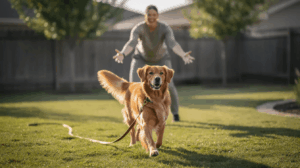
- Long line: A long training line can give your dog room to move while allowing you to maintain control during outdoor practice. Use a properly fitted collar or harness appropriate for your dog, handle the line carefully, and avoid allowing your dog to build speed and hit the end of the line.
- Treat pouch: Keeps rewards accessible without displaying them before the recall.
- Properly fitted collar or harness: Provides appropriate control during training.
Keep your dog on a leash or long line until you can confidently predict the response in the environment where you are practicing. Never test an unreliable recall near traffic or another serious hazard.
If an e-collar is part of a professional training program, follow the trainer’s instructions for its use rather than introducing or adjusting the equipment on your own. Training tools should be selected and used according to the dog’s needs, the training plan, and appropriate safety considerations.
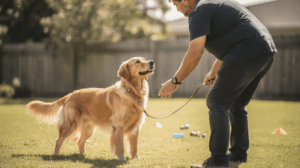
Step-by-Step: How to Train a Dog to Come When Called
The most useful recall progression moves from simple environments to more challenging ones. Keep sessions short enough that your dog can remain engaged and successful.
Phase 1: Teach Recall Indoors
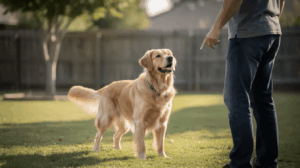
Start in a quiet room with few distractions. Have your dog only a short distance away and keep rewards available but out of sight.
Follow these steps:
- Get your dog’s attention: Say your dog’s name once if needed, then give your recall cue in a happy tone.
- Encourage movement: Take a few steps backward, crouch down, or use inviting body language to encourage your dog to move toward you.
- Reward the response: As your dog commits to coming toward you, mark and reward the behavior. When the dog reaches you, offer praise, food, play, or another preferred reward.
- Practice gentle collar handling: Briefly touch or hold the collar while rewarding so physical contact does not always predict restraint or the end of fun.
- Release your dog: When appropriate, release the dog back to what they were doing so recall does not always mean that freedom is over.
Practice several easy repetitions rather than pushing your dog until they become tired or distracted.
Do not show the treat before every recall. Your goal is for the cue to predict the opportunity for a reward, not for the dog to wait until they see food.
Recall games can also make practice more engaging. Hide-and-seek is one option: move into another room, call your dog, and reward when they find you. A family round-robin game can also work when each person takes turns calling the dog and rewarding the response.
Phase 2: Add Distance and Mild Distractions
Once your dog is responding consistently indoors, move to a backyard or another controlled outdoor area.
Use the long line for safety and gradually increase the distance between you and your dog. Allow the dog to explore, then give the recall cue when you are reasonably confident they can respond.
Introduce mild distractions one at a time. Examples include:
- A toy on the ground
- Another family member nearby
- Normal neighborhood sounds
- Mild movement in the environment
- A familiar outdoor location
If your dog responds, reward generously.
If your dog hesitates, avoid turning the exercise into a struggle. Reduce the distance or distraction level and try again. The long line is a safety tool, not a punishment.
Track progression by watching your dog’s consistency. Increase distance or distractions only when your dog is responding reliably at the current level. If responses become inconsistent, make the exercise easier and rebuild success before adding another challenge.
Phase 3: Practice in Real-World Environments
Once your dog is responding well in controlled outdoor settings, gradually introduce more realistic distractions.
Choose appropriate locations where your dog can remain safely managed. Keep the long line attached and start farther away from major distractions.
Possible distractions include:
- Distant dogs
- People walking by
- Joggers
- Birds
- New smells
- Normal neighborhood activity
Start with the level of distraction your dog can handle successfully. If the dog stops responding, increase distance or return to an easier environment.
Avoid testing recall in highly distracting or unsafe situations before your dog is ready. A crowded beach, an active dog park, wildlife, or heavy traffic can overwhelm a dog that is still learning. Build difficulty gradually and continue using a leash or long line when you cannot confidently predict the response.
For additional professional guidance, the UC Davis Recall Training Guide also recommends gradual progression, positive reinforcement, controlled practice, and caution around dangerous environments.
DIY Training vs. Professional Support for Recall
Many owners can build recall through consistent practice at home. However, some dogs and situations benefit from professional instruction.
When At-Home Training May Be Enough
You may be making useful progress when:
- Your dog responds consistently in the environments you have trained.
- Your dog can handle gradually increasing distractions.
- You feel comfortable delivering rewards at the right time.
- Your dog approaches you willingly after the recall cue.
- You can safely control the dog with a leash or long line when needed.
Puppies and adult dogs can both learn recall, but individual dogs may progress at different rates.
Keep notes or short videos if helpful. Tracking progress can make gradual improvements easier to recognize.
When to Consider Professional Training
Professional help may be useful when:
- Your dog’s chase behavior creates a safety concern.
- Aggression or intense reactivity makes recall practice difficult.
- Your dog consistently ignores the cue despite careful progression.
- You are unsure how to increase distance or distractions safely.
- You want direct feedback on your timing and handling.
- You do not have access to an appropriate training environment.
Private lessons can provide personalized instruction and real-time feedback on how you communicate with and handle your dog. A trainer can observe your timing and technique and help you practice skills in a structured setting.
Off Leash K9 Training Southern Delaware offers private lessons and Board & Train programs for owners who want professional help with obedience, recall, and related training goals. Program suitability depends on the dog’s age, behavior, and training needs. Dog Obedience Training in Dover, DE
If progress has stalled or safety is becoming a concern, professional support may be useful. Private lessons can provide direct feedback and structured practice, while an immersive training program may be appropriate for some dogs and owners.
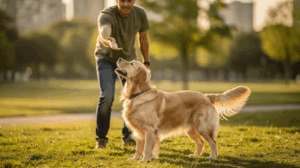
Common Recall Problems and How to Fix Them
Even with a good plan, owners commonly encounter problems during recall training. Most can be addressed by reducing difficulty, improving reward value, or changing the environment.
Problem 1: Your Dog Comes at Home but Ignores You Outside
A dog that responds indoors but ignores recall at a park has not necessarily become stubborn. Outdoor environments contain more smells, movement, sounds, people, animals, and other distractions.
Fixes:
- Return to a long line for outdoor practice.
- Start farther away from major distractions.
- Use rewards your dog finds especially motivating.
- Increase difficulty gradually.
- Avoid repeating the recall cue when you know the dog is unlikely to respond.
Problem 2: Your Dog Runs Toward You but Stops Short
Some dogs learn that coming close means being grabbed, leashed, or taken home.
Fixes:
- Reward the dog for coming all the way to you.
- Practice gentle collar touches while delivering rewards.
- Occasionally reward the recall and then release the dog to sniff or explore.
- Avoid making every recall end the activity.
The goal is for arriving near you to remain a positive part of the behavior.
Problem 3: Your Dog Only Comes When You Show Food
If your dog checks your hands before deciding whether to respond, they may be responding to the visible food rather than the cue.
Fixes:
- Keep treats out of sight.
- Give the cue before reaching for the reward.
- Reward after the dog begins responding.
- Mix food rewards with play, toys, praise, or other rewards your dog values.
- Gradually make the cue itself more meaningful through repeated successful practice.
Problem 4: Your Dog Responds When Alone but Not Around Other Dogs
Other dogs can be especially difficult distractions because they may be more rewarding to your dog than the environment you are trying to create.
Fixes:
- Start at a greater distance from other dogs.
- Use a long line.
- Reward successful responses generously.
- Move closer only when your dog remains responsive.
- Practice around calm, controlled distractions before attempting busier environments.
Problem 5: You Have Multiple Dogs
Multiple dogs can make recall practice confusing. One dog may respond to another dog’s cue, or both dogs may continue playing instead of returning.
Fixes:
- Train each dog individually first.
- Use each dog’s name before its recall cue when appropriate.
- Practice one dog responding while the other waits.
- Use long lines for controlled outdoor practice.
- Begin group recalls only after individual responses are reliable.
These problems do not mean recall training has failed. They usually mean the current environment is too difficult or the behavior needs more practice in that context.
Frequently Asked Questions
How do I train a dog to come when called?
Start in a quiet room with your dog nearby. Say your recall cue once, encourage your dog to approach, and reward the response. Gradually add distance and distractions as your dog becomes consistent.
Why does my dog come inside but ignore me outside?
Outdoor smells, sounds, movement, and animals make responding more difficult. Practice with a long line, move farther from distractions, and use rewards your dog values before increasing the challenge.
What word should I use for recall?
Choose one clear word, such as “come” or “here,” and have everyone use it consistently. Avoid repeating the cue when your dog does not respond; make the exercise easier instead.
What if my dog only comes when I show a treat?
Keep treats out of sight and give the cue before reaching for a reward. Reward your dog after responding so the recall cue, rather than visible food, signals the opportunity to earn something enjoyable.
Should I punish my dog for coming back slowly?
No. Punishing your dog after returning can make approaching you less appealing. Reward the return, then adjust future practice by reducing distance or distractions.
When can I practice recall without a leash?
Begin in a secure, enclosed setting once your dog responds consistently under the conditions you have practiced. Continue using a leash or long line around hazards and wherever you cannot confidently predict the response.
When should I get professional help with recall training?
Consider professional instruction if progress stalls, your dog’s chasing creates safety concerns, or aggression or intense reactivity makes practice difficult. A trainer can help with timing, handling, and a suitable training progression.
Conclusion and Next Steps
Reliable recall is built through a clear cue, valuable rewards, safe equipment, repetition, and gradual increases in distance and distractions. The process is simple in concept: start where your dog can succeed, reinforce the response, and make the training more challenging only when your dog is ready.
Start with these steps:
- Choose one recall word and use it consistently.
- Identify rewards your dog values and keep them available during practice.
- Practice indoors first and move outdoors when your dog responds consistently.
- Use a long line and properly fitted walking equipment for controlled outdoor recall practice.
- Increase distractions gradually rather than testing your dog in the most difficult environment.
- Seek professional guidance if safety concerns, aggression, intense reactivity, or stalled progress make training difficult.
Dover dog owners who want additional help can schedule a free phone consultation with Off Leash K9 Training Southern Delaware to discuss their dog’s behavior, training history, and goals.
Related obedience skills such as loose-leash walking, door manners, place, heel, and other commands can also support better everyday control. You can learn more about dog obedience training and review current program information on the Plans & Pricing page.
Additional Resources
For owners who want additional guidance, these resources provide useful recall-training information:
- UC Davis Recall Training Guide – Guidance on recall, positive reinforcement, controlled practice, long-line use, and safety.
- AKC Recall Training Guide – Step-by-step recall exercises covering name recognition, collar handling, rewards, distance, and distractions.
- Research on Dog Training With and Without Remote Electronic Collars – Peer-reviewed research comparing professional training approaches for recall and general obedience.
- Systematic Review of Conditioned Reinforcement in Animal Training – Review of research on clickers and other conditioned reinforcers.
Keep recall practice fun, brief, and manageable. Build the behavior gradually rather than testing it in situations where your dog is unlikely to succeed. When safety is a concern or progress has stalled, professional guidance can help you create a more structured training plan.
Off Leash K9 Training Southern Delaware serves Dover and surrounding Southern Delaware communities and offers a free phone consultation for owners who want to discuss their dog’s training needs.
