

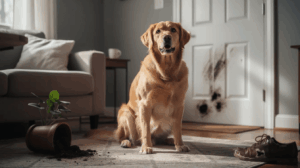
If your dog barks, howls, paces, destroys items, has accidents, or tries to escape when you leave, you may be seeing signs of separation anxiety in dogs. These behaviors can also have other causes, so the key is to look for a consistent pattern connected to your absence rather than treating one behavior as proof of anxiety.
Separation-related distress can be difficult for both dogs and owners. Dogs may begin showing signs before departure, shortly after a person leaves, or when a particular attachment figure is absent. Video recordings can be especially useful because many of the most important behaviors happen when nobody is home.
This guide explains the common signs of separation anxiety in dogs, how to distinguish them from boredom or medical problems, and practical steps Dover and Southern Delaware dog owners can consider. If your dog is injuring itself, showing severe distress, or experiencing a sudden behavior change, involve your veterinarian and consider professional behavior support.
By the end of this guide, you will know:
- The most common signs of separation-related distress
- What subtle behaviors to watch for before and during an absence
- How separation anxiety differs from boredom, incomplete house training, and medical problems
- What owners can do to make alone-time training more manageable
- When to involve a veterinarian or professional dog trainer
What Is Separation Anxiety in Dogs?
Separation anxiety is commonly used to describe significant distress that occurs when a dog is separated from an attachment figure or left alone. Veterinary behavior sources also use the term “separation-related distress” because not every dog displaying these behaviors experiences the same emotional state.
The important pattern is the connection between the behavior and separation. A dog may be calm when a person is home but begin pacing, vocalizing, destroying objects, or eliminating shortly before or after that person leaves. Some dogs react when they see departure cues such as keys, shoes, a bag, or a person moving toward the door.
One behavior by itself does not establish a diagnosis. A dog that occasionally chews a shoe, barks at a noise, or has an accident may have another issue. The pattern, timing, environment, and the dog’s overall behavior all matter.
Why the Timing Matters
Separation-related behaviors often occur early in an absence, and some dogs show distress before the person actually leaves. Veterinary guidance notes that signs can begin within the first 15 to 30 minutes after departure, although the exact timing varies by dog.
For that reason, watching what happens before you leave and during the early part of an absence can provide more useful information than checking the condition of the house when you return.
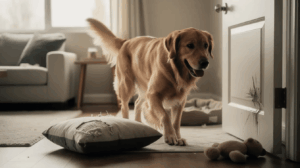
Signs of Separation Anxiety in Dogs
Dogs can show separation-related distress in several ways. The most useful approach is to look for a cluster of behaviors that repeatedly occurs around departures or absences.
Excessive Barking, Howling, or Whining
Persistent vocalization is one of the most recognizable signs. A dog may bark, howl, whine, or whimper after the owner leaves. Some dogs begin vocalizing while departure cues are happening.
The important distinction is the pattern. Brief whining that stops as the dog settles does not automatically mean separation anxiety. Vocalization that repeatedly occurs during absences, especially when paired with pacing, destruction, escape attempts, or other distress behaviors, deserves closer attention.
A camera can help you determine whether your dog settles after a few minutes or remains distressed for much of the absence.
Destructive Behavior
Dogs experiencing separation-related distress may chew, scratch, dig, or damage household items while alone. The location of the destruction can provide useful clues.
Damage around doors, windows, exit points, or objects associated with the owner can be especially relevant. However, destruction is not exclusive to separation anxiety. Puppies may chew while teething, and bored or under-stimulated dogs may also damage household items.
Look at when the destruction occurs, where it occurs, and whether your dog is calm when you are home.
House Soiling
An otherwise house-trained dog may urinate or defecate indoors when left alone. When accidents happen only during absences, separation-related distress is one possible explanation.
House soiling can also result from incomplete house training, marking, gastrointestinal problems, urinary problems, incontinence, or other medical conditions. If a previously reliable adult or senior dog suddenly starts having accidents, a veterinary examination is appropriate before assuming anxiety is the cause.
Pacing and Inability to Settle
Some dogs cannot relax after their person leaves. They may walk repeatedly between rooms, remain near a door, watch windows, or move around without settling.
Pacing is not automatically a sign of separation anxiety. Dogs can pace because of pain, excitement, environmental triggers, or other forms of stress. The connection to departure is what makes the behavior more relevant when assessing separation-related distress.
Excessive Panting, Drooling, or Trembling
Panting, drooling, trembling, and other physical signs can accompany distress. These behaviors can be particularly easy to miss because owners may not see them unless they use a camera or notice evidence after returning home.
These signs also have medical causes. If excessive panting, drooling, trembling, vomiting, or other physical changes occur suddenly or outside the context of separation, contact your veterinarian.
Frantic Escape Attempts
Some dogs try to escape when left alone. They may scratch doors, chew barriers, dig at exits, or attempt to push through windows or confinement areas.
Escape behavior can cause serious injuries, including damaged teeth or injured paws. If your dog is hurting itself while trying to get out, safety becomes the immediate priority. Do not assume that stronger confinement will solve the problem.
Loss of Interest in Food or Food Toys
Some dogs that are highly distressed will not eat food, treats, or food toys when left alone even though they normally enjoy them.
This can be useful information, but it is not a standalone diagnostic test. Appetite can change for many reasons. Consider whether your dog normally eats the item and whether refusal happens specifically during absences.
Overexcited Greetings When You Return
A dog may show an unusually intense greeting when an owner returns after an absence. Jumping, vocalizing, pacing, or frantic attention-seeking can occur.
An excited greeting by itself does not prove separation anxiety. It becomes more meaningful when it appears alongside other consistent separation-related behaviors.
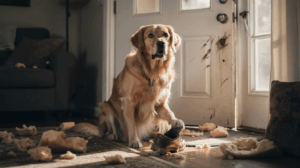
Subtle Signs That Can Appear Before You Leave
Not every sign occurs after the door closes. Some dogs react to the routine that predicts an upcoming absence.
Following You From Room to Room
A dog may begin following its owner closely as departure approaches. This can include shadowing the owner, waiting near the door, or becoming unusually attentive when the owner picks up keys or puts on shoes.
Following can also be normal behavior for social dogs, so it should not be treated as proof of separation anxiety. Look for a change from your dog’s normal routine and whether the behavior consistently appears around departure cues.
Pacing or Restlessness Before Departure
Some dogs become restless when they recognize that their owner is preparing to leave. They may pace, whine, pant, or repeatedly move between the owner and the exit.
Recording these behaviors can help identify which departure cues are associated with distress. Veterinary guidance recognizes pre-departure behavior as an important part of evaluating separation-related distress.
Refusing Food During Departure Practice
If your dog normally enjoys a particular food toy but refuses it when you prepare to leave, that change may indicate that the dog is too distressed to engage with the enrichment.
This is one reason food toys should not be viewed as a complete solution. A dog that is already highly distressed may not be able to eat or play.
Separation Anxiety vs. Boredom or Other Problems
Not every problem that happens when a dog is alone is separation anxiety. Similar behaviors can come from boredom, incomplete house training, environmental triggers, confinement distress, noise sensitivity, or medical conditions.
| Behavior pattern | Separation-related distress may be more likely | Other possible explanations |
| Barking | Begins around departure and continues with other distress signs | Outside noises, alert barking, barrier frustration |
| Destruction | Repeatedly occurs during absences, especially around exits | Chewing, teething, boredom, scavenging |
| House soiling | Happens mainly when the dog is alone | Medical problems, incomplete house training, marking |
| Pacing | Appears around departure and continues during absence | Pain, environmental stress, excitement |
| Food refusal | Occurs specifically during separation | Illness, food preference, appetite changes |
| Escape behavior | Occurs when separated or confined | Confinement distress, outside triggers |
A camera recording is one of the most useful tools for identifying these patterns. It can show whether your dog settles, what happens immediately after departure, and whether another environmental trigger is involved.
Veterinary sources emphasize ruling out other explanations before treating the behavior as separation anxiety.
Medical Problems Can Look Like Separation Anxiety
A sudden behavior change should not automatically be labeled separation anxiety.
Pain, urinary problems, gastrointestinal issues, cognitive changes, and other medical conditions can contribute to accidents, restlessness, vocalization, or changes in normal behavior. A dog that starts having accidents while alone may have a urinary problem rather than a behavior problem.
This is particularly important for older dogs. If your dog’s behavior changes suddenly, schedule a veterinary examination before beginning an intensive behavior plan.
A veterinarian can help determine whether a medical issue is contributing to the behavior and whether referral to a veterinary behaviorist is appropriate.
What to Do If You Notice Signs of Separation Anxiety
The goal is to make alone-time practice gradual and manageable rather than repeatedly exposing your dog to overwhelming distress.
1. Record What Happens When You Leave
Use a camera to observe the first part of an absence. Record what happens before you leave, how your dog responds to departure cues, and what happens after the door closes.
You do not need to create a stressful test simply to collect footage. If your dog has a history of severe panic or self-injury, prioritize safety.
2. Identify Your Dog’s Triggers
Look for patterns involving keys, shoes, bags, the front door, a particular departure routine, or a specific person leaving.
Knowing which cues trigger your dog’s response can help you and your veterinarian or behavior professional build a more targeted plan.
3. Practice Very Short Separations
For dogs that can tolerate brief separation, gradual practice can help build comfort with being alone. Start with an absence short enough that your dog remains relaxed, then increase duration only when the current step is consistently comfortable.
There is no universal starting time. One dog may tolerate several minutes while another may become distressed after a few seconds.
If your dog begins pacing, panting, vocalizing, freezing, or showing other distress, the exercise may be too difficult. Reduce the duration or difficulty rather than pushing through the reaction.
4. Work on Departure Cues
Departure cues can sometimes be practiced without actually leaving. For example, you might pick up your keys, put them down, and continue with a normal activity.
The goal is to reduce the automatic connection between a cue and a stressful departure. Keep these exercises brief and stop if your dog becomes more anxious.
5. Provide a Safe, Familiar Environment
Give your dog access to an area where it normally rests and feels comfortable. Familiar bedding, safe enrichment, and predictable routines can support management.
A crate is not automatically the right choice. Some dogs are comfortable in crates, while others become more distressed when confined. If a dog is attempting to break out or injuring itself, use a safer setup and seek professional guidance.
6. Avoid Punishment
Do not punish your dog for barking, destruction, accidents, or other behaviors that occurred while you were away.
Punishment after the fact does not address the reason for the behavior and may increase fear or stress. Focus instead on safety, management, and a gradual behavior plan.
7. Reduce Unavoidable Long Absences During Training
If your dog cannot currently tolerate long periods alone, management may be necessary while training is underway. Depending on the situation, this could include help from family, a trusted sitter, daycare, or other arrangements your dog already handles well.
The appropriate option depends on the individual dog and household. Veterinary guidance recommends minimizing situations that repeatedly trigger severe distress while behavior modification is being developed.
When to Contact a Veterinarian or Professional
Professional help is especially important when separation-related behavior is severe, persistent, or unsafe.
Contact a veterinarian if:
- Your dog has a sudden change in behavior
- House soiling begins unexpectedly
- Your dog shows signs of pain or illness
- Your dog vomits, refuses food, or develops other physical symptoms
- Your dog is injuring itself
A veterinary behaviorist may be appropriate for dogs with significant anxiety or cases that do not improve with basic management and behavior modification.
Professional dog training can also provide structured guidance for obedience, handling, and behavior concerns. In Dover and Southern Delaware, Off Leash K9 Training Southern Delaware offers private lessons, obedience programs, Board & Train, puppy training, and behavior-focused services. The team recommends starting with a free phone consultation to discuss the dog’s age, behavior, and training goals.
However, separation anxiety should not be treated as a simple obedience problem. A dog may have strong obedience skills and still experience significant distress when left alone.
Can Crate Training Help?
Crate training can be useful for dogs that already view the crate as a comfortable resting place. It is not a universal treatment for separation anxiety.
If a dog panics when confined, forcing the dog to remain in the crate can increase escape behavior and injury risk. Veterinary behavior guidance recommends assessing whether the crate itself is contributing to the problem.
If your dog is comfortable in a crate, it may be part of a safe management plan. If your dog is trying to break out, damaging its teeth, or injuring its paws, stop using the crate for unsupervised absences and discuss safer alternatives with a veterinarian or qualified behavior professional.
Does Exercise Fix Separation Anxiety?
Exercise can be an important part of a healthy routine, but it should not be presented as a cure for separation anxiety.
A walk, play session, training session, or age-appropriate activity may help meet your dog’s physical and mental needs. However, a tired dog can still experience separation-related distress.
The more important goal is teaching the dog to remain comfortable during gradually increasing periods of separation while avoiding unnecessary panic.
How Long Does Separation Anxiety Training Take?
There is no single timeline that applies to every dog.
Some dogs respond to a structured behavior plan relatively quickly, while others need months of gradual work. Severity, the dog’s current tolerance for being alone, the consistency of practice, medical factors, household schedules, and the training approach can all affect progress.
Avoid setting an arbitrary time target. Instead, measure progress by your dog’s behavior. A dog that remains relaxed for a slightly longer absence without distress is showing useful progress even if the change seems small.
Veterinary guidance notes that graduated departure work can take months in some cases.
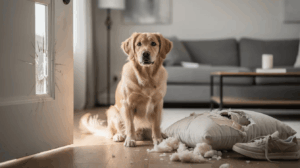
Common Mistakes to Avoid
Assuming Destruction Means Your Dog Is Spiteful
Destruction that occurs during an absence can be frustrating, but assuming the dog is acting out to punish you does not help identify the cause.
Look at the timing and circumstances instead. If destruction happens only when the dog is alone and is accompanied by vocalization, pacing, escape attempts, or other distress behaviors, separation-related distress should be considered.
Leaving the Dog Alone Until It “Gets Used To It”
Repeatedly exposing a highly distressed dog to long absences can make behavior modification harder. Training should be gradual and should keep practice within a level the dog can handle.
If your dog becomes distressed at a very short absence, reduce the difficulty and seek professional guidance rather than simply extending the absence.
Relying Only on Toys
Food toys and enrichment can be useful additions, but they are not a substitute for a behavior plan.
If your dog refuses a favorite food toy when alone, that may be useful evidence that the current level of separation is too difficult.
Assuming Every Accident Is Anxiety
Always consider medical causes, house-training history, age, and other environmental factors. A sudden change in elimination should be discussed with a veterinarian.
Frequently Asked Questions About Signs of Separation Anxiety in Dogs
What are the most common signs of separation anxiety in dogs?
Common signs include persistent barking, howling or whining, pacing, destruction, house soiling, excessive panting or drooling, escape attempts, food refusal, and unusually intense greetings after an absence. Not every dog displays all of these behaviors, and one isolated behavior does not establish separation anxiety.
How can I tell if my dog has separation anxiety or is just bored?
Look at the timing and pattern. Separation-related distress is closely associated with departure or absence and may include pacing, vocalization, destruction near exits, escape behavior, or an inability to settle. Boredom can also cause chewing or destruction, so video of your dog’s behavior when alone can help distinguish the possibilities.
Can separation anxiety start suddenly?
Yes. Separation-related problems can appear after changes in routine, household circumstances, environment, or other experiences. A sudden behavior change should also prompt a veterinary check because medical problems can produce similar signs.
Should I use a crate for a dog with separation anxiety?
Not automatically. A crate may work for a dog that already relaxes in it, but some dogs become more distressed when confined. If your dog attempts to escape or injures itself in the crate, use a safer management option and seek professional guidance.
Can obedience training alone fix separation anxiety?
Not necessarily. Obedience training can improve communication and help build useful skills, but separation-related distress requires specific work around being alone. A dog can respond well to commands and still become distressed when separated from its owner.
When should I get professional help?
Seek help when your dog cannot tolerate even brief absences, repeatedly injures itself, causes significant property damage, shows severe distress, or does not improve with careful management and gradual training. A veterinarian should be involved when behavior changes suddenly, or medical problems may be contributing.
Conclusion
Recognizing the signs of separation anxiety in dogs starts with observing the pattern rather than labeling one behavior. Persistent vocalization, pacing, destruction, house soiling, escape attempts, physical stress signs, and refusal of food can all occur with separation-related distress, particularly when they appear consistently around departures.
Use video to observe what happens when your dog is alone, rule out medical or environmental explanations, and keep alone-time training gradual. Avoid punishment and do not force a dog through severe distress. When the behavior is intense or unsafe, involve your veterinarian and consider professional behavior support.
Dover and Southern Delaware dog owners can also contact Off Leash K9 Training Southern Delaware for a free phone consultation to discuss their dog’s behavior and available training options.
