


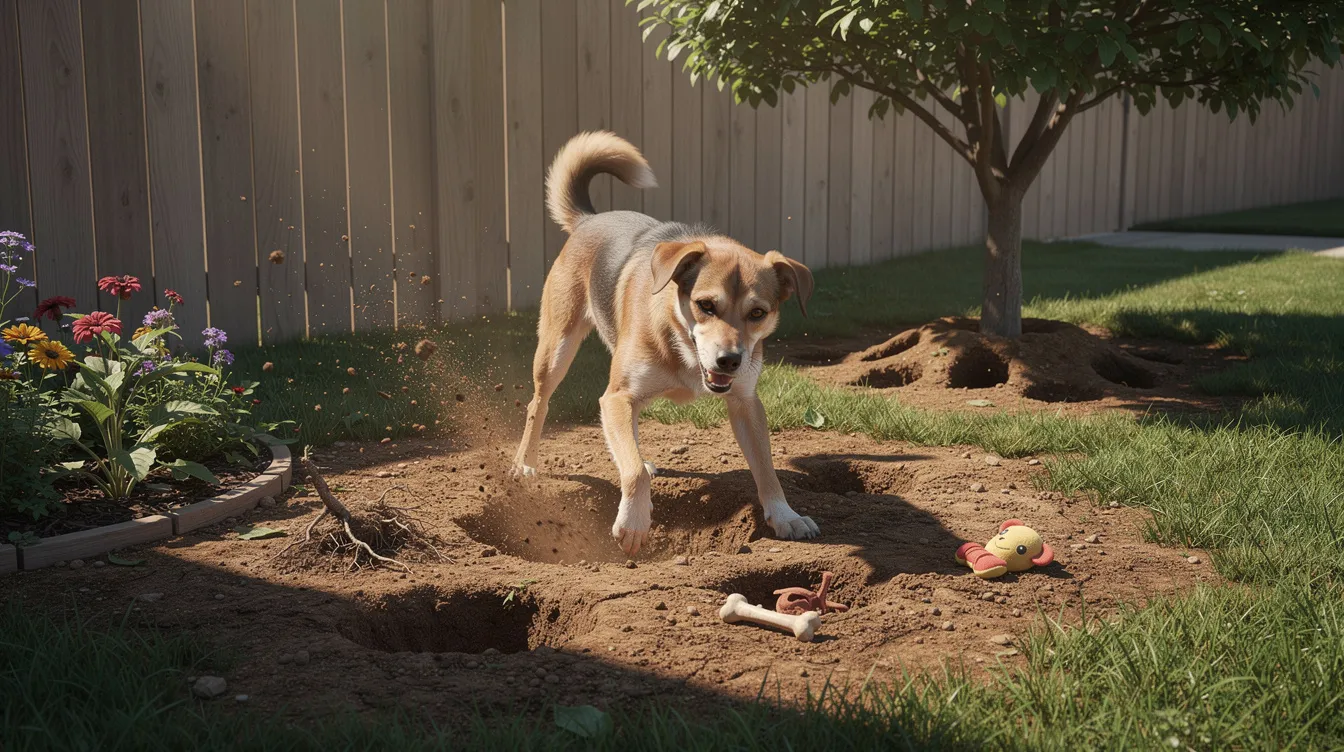
Dogs dig for many different reasons, and nearly all of them trace back to deeply wired survival instincts inherited from wolves and wild dogs. Whether your pet is excavating flower beds, scratching at bedding before sleep, or tunneling under a fence, the behavior serves a purpose-even when that purpose no longer matches modern suburban life. Understanding why dogs dig is the first step toward managing the behavior without fighting your dog’s nature.
This article covers the full spectrum of digging behavior: from normal, instinctive behavior rooted in ancestral canine biology to problematic patterns driven by boredom, anxiety, or breed-specific tendencies. It’s written for dog owners in the Dover, Delaware area and beyond who want practical, lasting solutions rather than quick fixes that fail. If your yard looks like a minefield or your dog is escaping under the fence, you’re in the right place.
The short answer: dogs dig due to a combination of instincts (denning, hunting, thermoregulation), environmental factors (heat, prey animals in the ground), emotional needs (separation anxiety, stress), and breed-specific tendencies. Most dogs that dig excessively are telling you something about their unmet needs.
Here’s what you’ll take away from this article:
- How to identify the specific triggers behind your dog’s digging
- The difference between normal and compulsive digging patterns
- Practical management strategies including designated digging zones, mental stimulation, and physical exercise
- Which dog breeds are genetically inclined to dig and why
- When digging signals a deeper problem that requires professional training or behavior modification
Understanding Natural Digging Instincts
Digging is one of the oldest behaviors in the canine repertoire. Long before dogs shared our homes, their ancestors relied on digging for survival-creating dens, caching food, pursuing prey underground, and regulating body temperature. Modern domestic canines retain these drives even when they have no practical need for them, which is why so many dogs dig holes in perfectly maintained yards without any apparent reason.
Ancestral and Survival Behaviors
Wild canids-wolves, foxes, and free-ranging wild dogs-dig dens to birth and raise their young, providing shelter, protection from predators, and thermal regulation. Research on free-ranging dogs has documented that even feral domestic dogs select den sites for whelping, choosing locations near humans but secluded enough to avoid disturbance. Pregnant females in particular show strong nesting behavior, digging to prepare a safe space for their litters.
Food caching is another deeply rooted instinct. Many dogs bury bones, toys, and treats to hide them for retrieval at a later time-a behavior directly inherited from ancestors who needed to protect surplus food from other animals. You might catch your dog trying to bury a chew toy under couch cushions or in a pile of dirt in the yard. This urge to bury and cache resources persists even when food is abundant.
Thermoregulation plays a major role as well. Dogs dig to reach cooler soil beneath the warm surface on hot days, creating a cool spot to lie in. UC Davis’s veterinary behavior service confirms that digging helps dogs cool off on hot days, especially in areas with exposed ground and limited shade. In Dover’s hot, humid summers, this comfort-seeking behavior is particularly common.
Breed-Specific Tendencies
Not all dog breeds are equally inclined to dig. Certain breeds have a genetic instinct to dig for hunting or burrowing, and understanding your dog’s heritage can explain a lot about what’s happening in your yard.
Terriers are bred for digging due to their hunting heritage-the word “terrier” itself comes from the Latin terra, meaning earth. Breeds like Jack Russell Terriers, Cairn Terriers, and Dachshunds were developed specifically to pursue prey underground through tunnels and burrows. These “earthdog” breeds maintain intense, persistent motivation to dig even when no quarry is present. The AKC’s Earthdog program channels this drive into a structured sport, demonstrating just how strong the instinct remains in modern pet variants.
Northern breeds with thick coats-Huskies, Malamutes, Samoyeds-frequently dig to access cooler ground, especially during warm weather. Hounds and schnauzers also show elevated digging tendencies. On the other end of the spectrum, toy breeds and sight hounds bred for non-groundwork roles tend to show less intrinsic drive. However, experts caution that breed is only one factor. Environmental conditions, emotional states, and learned behaviors can produce persistent digging in any dog.
Normal vs Compulsive Digging Patterns
Healthy, instinct-driven digging is intermittent, triggered by clear stimuli, and doesn’t create safety hazards. A dog who digs a shallow hole in the shade on a warm afternoon, scratches at bedding before settling down to sleep, or investigates a mole tunnel is exhibiting normal canine behavior.
Compulsive digging looks different. It tends to be frantic, repetitive, and difficult to interrupt. Dogs may dig at doors, windows, or along fence lines-especially when left alone. According to Vetster’s behavioral analysis, anxiety-driven digging often co-occurs with panting, whining, pacing, and other stress behaviors. When digging injures paws, creates escape routes, or causes significant property destruction, it has crossed the line from instinctive behavior into a problem requiring intervention.
Understanding where your dog falls on this spectrum connects directly to choosing the right response-whether that’s providing a sandbox or enrolling in a behavior modification program.
Common Reasons Dogs Dig
With instincts as the foundation, specific modern triggers determine when, where, and how intensely your dog digs. These common reasons fall into three broad categories: environmental comfort, mental stimulation needs, and emotional distress.
Environmental and Comfort Factors
Digging helps dogs cool off on hot days by exposing cooler, moist dirt beneath the sun-baked surface. Dogs without adequate shade or fresh air circulation are especially prone to excavating cool resting depressions. In Dover’s humid summers, this behavior spikes-you’ll often find holes in shaded areas or along the north side of structures where the ground stays cooler.
Shelter and nest creation also drive digging. Pregnant females dig to prepare dens, but even spayed pets scratch at bedding, blankets, or crate floors to arrange a comfortable resting surface. This denning instinct is so deeply embedded that most dogs perform some version of it before lying down, circling and pawing at their sleep area.
Dogs may also dig to investigate interesting sounds or scents underground. If moles, voles, or burrowing insects are active in your yard, your dog’s nose and ears will detect them long before you notice any sign. Dogs dig to seek prey like rodents, and this hunting-driven excavation often follows specific trails or concentrated areas where animals are burrowing beneath the ground.
Behavioral and Mental Stimulation Needs
Boredom can lead dogs to dig excessively. Inadequate exercise or mental stimulation can lead to digging as one of several destructive outlets. Dogs left in yards for long periods without interaction, toys, or structured activity will often resort to excavating flower beds, digging along fence lines, or creating craters in open lawn areas. The behavior becomes self-reinforcing: the act of digging provides sensory satisfaction through paws, nose, and the texture of dirt and sand.
Playful exploration accounts for much of the digging humans misinterpret as destructive. Puppies dig as part of play-it’s fun, tactile, and rewarding. Older dogs continue to enjoy the sensory experience. This kind of digging tends to be relaxed and exploratory rather than frantic, and it’s often accompanied by a wagging tail and enthusiastic body language.
Prey detection triggers some of the most determined digging episodes. Even dogs with no formal hunting background will dig persistently at suspected burrows. The smell of animals underground activates deep prey drive, and some dogs will excavate impressive holes chasing a scent trail they can never actually catch.
Emotional and Stress-Related Triggers
Anxiety can drive dogs to dig at exits-doors, windows, and fence lines-particularly during episodes of separation anxiety or noise phobias. Digging due to anxiety often appears frantic and intense, accompanied by barking, whining, and pacing. Anxiety-driven digging often occurs during loud noises or when alone, such as during thunderstorms or fireworks. Digging can be a behavior to escape confinement when feeling stressed, and this form of escape-motivated behavior is one of the most dangerous because it can result in a loose dog in traffic.
Separation anxiety can lead to destructive digging behavior that goes well beyond simple boredom. Dogs experiencing true separation distress may injure their paws digging at hard surfaces, damage door frames, or excavate deep holes under fences within minutes of their owner leaving. Intact (unneutered) animals may also dig to escape to find mates, adding a hormonal component to escape-driven behavior.
Even negative attention from humans can reinforce digging. If your dog learns that digging in the yard brings you running outside-even to scold-the attention itself becomes a reward. This creates a cycle that’s difficult to break without understanding the underlying cause and restructuring your response.
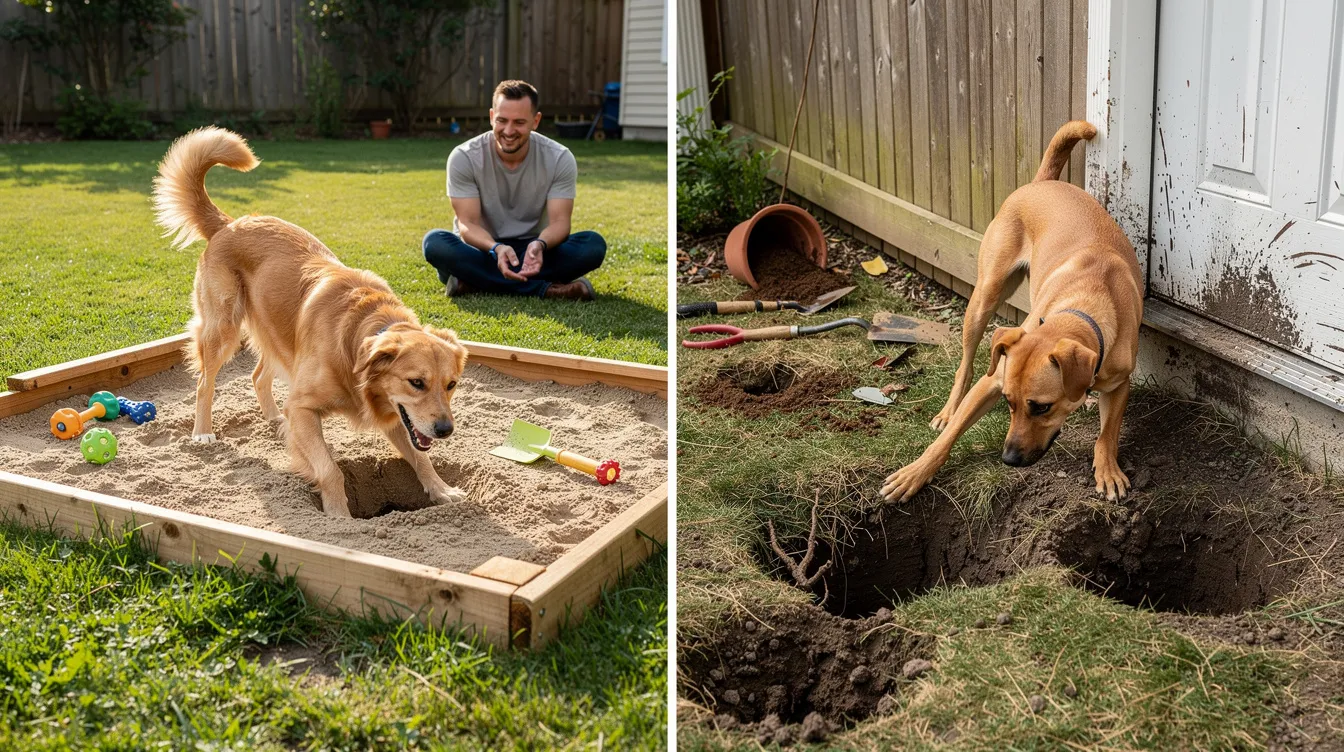
Identifying Problematic vs Normal Digging Behavior
Knowing when your dog’s digging has crossed from natural outlet to behavioral concern requires systematic observation. Not every hole in the yard warrants alarm, but patterns of escalation, distress signals, or safety risks demand a closer look.
Assessment Methods for Dog Owners
When evaluating your dog’s digging behavior, start by tracking the basics:
- Observe timing and frequency: Note when digging occurs-time of day, weather conditions, whether it happens during your absence or while you’re home. Seasonal patterns (summer heat, spring prey activity) often point to environmental triggers.
- Document locations: Map where holes appear. Random shallow pits in open areas suggest boredom. Holes concentrated near fence lines or doors indicate escape attempts. Digging in shaded areas or under structures points to thermoregulation.
- Record emotional indicators: Watch your dog’s body language during digging. A relaxed posture with a neutral or wagging tail suggests healthy exploration. Panting, pacing, whining, or frenzied scratching signals distress or compulsion.
- Assess destruction levels: Evaluate the impact on safety and property. Occasional shallow holes in the yard are manageable. Escapes under fences, injured paws from digging on hard surfaces, or destroyed landscaping represent escalating problems.
- Consider context changes: Factor in your dog’s age, breed, neutered status, daily exercise amount, and any recent household changes-new pets, moves, schedule shifts-that may have triggered increased digging.
Warning Signs Requiring Professional Help
| Behavior Aspect | Normal Digging | Concerning Digging |
|---|---|---|
| Frequency | Occasional, intermittent | Daily or near-constant |
| Intensity | Relaxed, exploratory, playful | Frenzied, frantic, cannot be interrupted |
| Location | Soil, shady spots, seasonal areas | Doors, windows, fence lines, indoors |
| Emotional Signs | Relaxed body, curious tail movement | Panting, pacing, whining, obsessive scratching |
| Motivation | Hot weather, prey detection, play, nesting | Anxiety, escape attempts, compulsive repetition |
| Damage / Safety | Small holes, minimal risk | Escapes, paw injuries, structural damage |
Treatment for anxiety-related digging includes behavior modification that addresses root causes rather than surface symptoms. If your dog’s digging matches the “concerning” column-especially if it involves escape attempts or signs of distress-professional intervention is the most reliable path forward.
Common Challenges and Solutions
Every digging motivation calls for a different management approach. The strategies below match specific triggers to practical interventions, moving from the most common scenarios to the most complex.
Boredom and Under-Stimulation
Provide daily mental stimulation and physical exercise for dogs showing boredom-related digging. Dogs need at least 30 minutes of exercise daily-many active breeds require significantly more. Structured activities like fetch, swimming, and obedience training burn energy far more effectively than unsupervised yard time.
Mental enrichment is equally important. Puzzle toys can provide mental stimulation for dogs left outdoors, and scent walks can reduce boredom-related digging behavior by engaging your dog’s strongest sense. Use puzzle toys to keep bored dogs engaged outdoors, and rotate them regularly to maintain novelty. Training sessions can change a dog’s perception of the yard from a boring enclosure to an engaging environment with positive reinforcement and varied activities.
Anxiety-Driven Digging
Professional behavior modification programs address the underlying anxiety triggers rather than just suppressing the digging symptom. Desensitization and counter-conditioning techniques-gradually exposing dogs to anxiety triggers at manageable intensities while building positive associations-are the evidence-based standard. For noise phobias, providing safe hiding spots, white noise machines, or compression wraps during storms can reduce panic-driven digging.
Environmental management matters: secure fencing, consistent daily routines, and adequate owner presence all reduce anxiety. For severe cases, a 2 Week Board and Train program can establish structured behavior patterns in a controlled setting before transitioning skills back to the home environment.
Destructive Property Damage
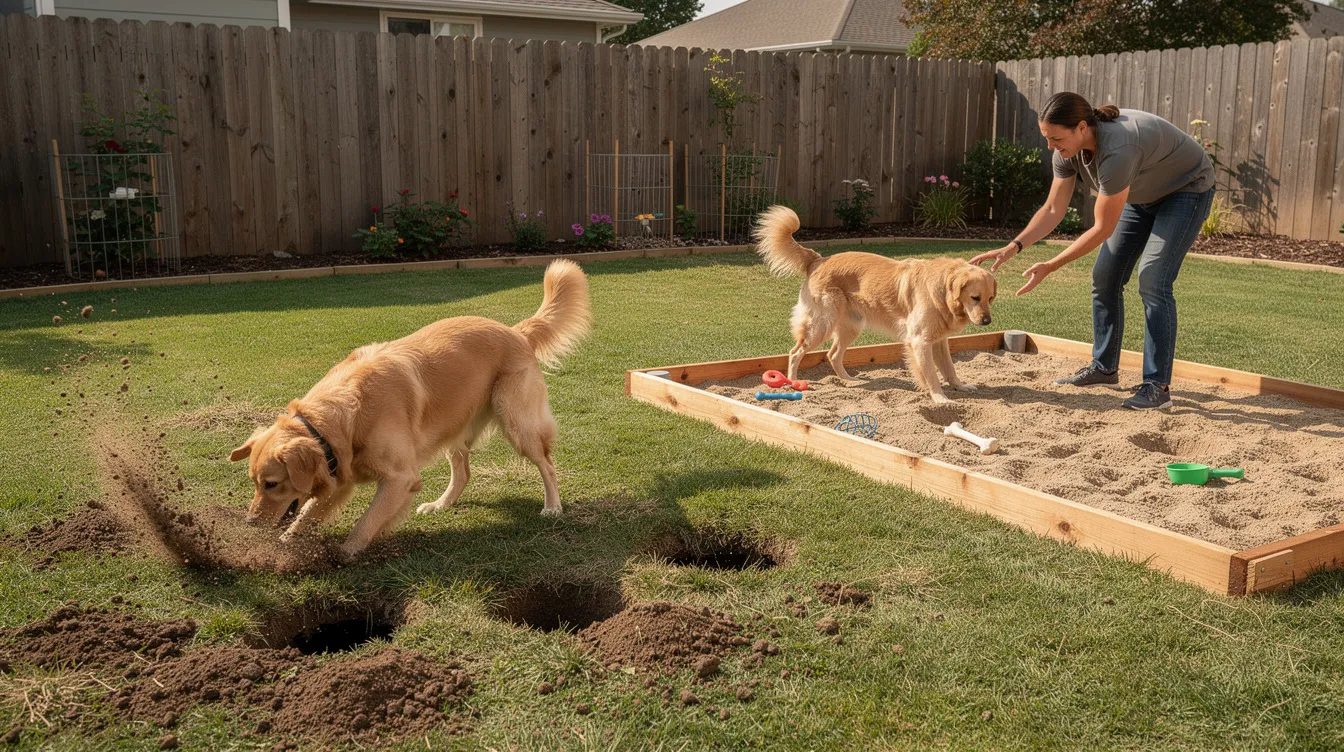
Designated digging zones can satisfy a dog’s digging instinct without sacrificing your landscaping. Redirect digging behavior to a designated digging spot like a sandbox; bury treats and toys in the approved area to make it more attractive than your garden beds. When your dog digs in an unapproved spot, calmly redirect them to the designated digging spot and reward them with positive reinforcement when they comply.
To discourage digging in protected areas, restrict access to gardens with low fencing or lay wire mesh beneath the soil surface. Supervising dogs in the yard can prevent self-reinforcing digging habits from developing-monitor your dog to prevent unsupervised digging outside, especially during the early stages of training. Training sessions can redirect a dog’s digging behavior over time as the dog learns which areas are acceptable.
Escape-Motivated Digging
Address containment by extending fence bottoms underground, pouring concrete footings along perimeters, or burying chicken wire beneath fence lines. Inspect your yard regularly for weak points that a determined dog could exploit.
Equally important is building reliable recall and boundary training. Teach “stay,” “come,” and boundary awareness through structured private training sessions so your dog understands and respects limits even during moments of high drive. For intact animals showing escape behavior driven by mating instincts, discuss spaying or neutering with your vet as part of a comprehensive approach. Off-leash reliability doesn’t happen overnight, but it eliminates the root motivation to dig out when a dog truly trusts and responds to their handler.
Conclusion and Next Steps
Natural digging behaviors serve as an outlet for instincts and needs that are hardwired into every dog’s DNA. The goal isn’t to stop digging entirely-it’s to understand the motivation, provide appropriate outlets, and address any underlying emotional or medical issues driving excessive behavior.
Start with these immediate steps:
- Assess your dog’s specific triggers using the observation methods outlined above
- Increase daily exercise and enrichment-aim for at least 30 minutes of physical exercise plus mental stimulation through puzzle toys, scent work, or training
- Create a designated digging zone with a sandbox or approved dirt area stocked with buried toys and treats
- Supervise yard time during the retraining period to prevent old habits from reinforcing themselves
If your dog’s digging is anxiety-driven, escape-motivated, or resistant to basic management, professional training delivers the consistency and expertise most owners can’t replicate alone. Off Leash K9 Training of Dover offers free phone consultations to help you determine the right approach-whether that’s private lessons, a 1 Week Board & Train, or a comprehensive behavior modification program.
Related topics worth exploring include general basic obedience foundations, anxiety management techniques, and building off-leash reliability-all of which directly support long-term resolution of digging issues.
Additional Resources
- Free behavior consultation: Contact Off Leash K9 Training of Dover to discuss your dog’s specific digging challenges and determine the best training approach
- Board and train programs: For severe digging, anxiety, or escape behavior, immersive board and train options provide structured intervention in a professional environment
- Training plans and pricing: Review available plans and pricing for private lessons, group sessions, and comprehensive obedience packages
- Earthdog and enrichment sports: The AKC Earthdog program offers a constructive outlet for terrier and Dachshund breeds with strong digging drives
