

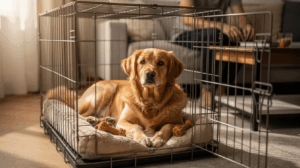
Crate training regression is what happens when a dog who was previously comfortable and calm in their crate starts resisting, whining, having accidents, or refusing to go inside. If your dog was doing well for weeks or months and suddenly starts struggling with the crate, it can be frustrating and confusing.
The good news is that crate training regression often has a contributing factor that you can investigate, and some cases can improve with a structured, gradual reset at home. It does not mean your dog has “failed” crate training. A sudden change in crate behavior can indicate that something has changed emotionally, physically, environmentally, or in the dog’s learning history.
This guide is for Dover and Southern Delaware dog owners dealing with sudden crate issues in a puppy or adult dog. Whether you’re dealing with nighttime barking, unexpected accidents, or a dog that suddenly refuses the crate, this article explains common causes, practical reset strategies, and signs that veterinary or professional support may be appropriate. It focuses on regression rather than starting crate training from scratch.
Here’s what you’ll learn:
- Why crate training regression can happen in puppies and adult dogs
- How to recognize early warning signs and more serious distress
- How to use a gradual reset to rebuild positive crate associations
- How routine, exercise, potty breaks, and consistency affect crate training
- When a veterinarian or professional trainer should be involved
Understanding Crate Training Regression
Crate training regression means your dog is backsliding after previously being comfortable in the crate. A dog that once entered willingly may start hesitating at the doorway. A puppy that slept quietly through the night may begin whining or barking again. A previously reliable dog may suddenly have accidents inside.
Regression can be partial or more significant. A dog may simply become slower to enter, need more encouragement, or show mild restlessness. In more serious cases, the dog may refuse the crate, panic, scratch at the door, attempt to escape, or show other signs of distress.
A sudden change should be treated as information rather than stubbornness. Looking at when the behavior happens, what changed beforehand, and whether there are any physical symptoms can help you determine what to do next.
What Crate Training Regression Looks Like Day-to-Day
The signs of crate training regression vary from dog to dog. Some dogs only struggle at night, while others are comfortable overnight but become distressed when left alone during the day.
Common signs include:
- Hesitating before entering the crate
- Needing extra encouragement to go inside
- Whining or barking after the door closes
- Restlessness or pacing
- Scratching at the crate door
- Increased drooling during confinement
- Attempting to escape
- Unexpected accidents after previously reliable crate habits
- Refusing to enter even when the crate contains a valued reward
Context matters. If the regression occurs only when you leave the house, separation-related distress may be part of the picture. If it happens after travel, boarding, a household change, or a frightening experience, the dog may have developed a new negative association with confinement.
How Regression Differs for Puppies vs. Adult Dogs
Puppies may experience normal developmental fear periods that temporarily change how they respond to new or previously familiar experiences. The American Kennel Club identifies a first fear period around 8–11 weeks and a second period around 6–14 months. During these windows, a puppy may become more cautious about experiences it previously tolerated, including crate-related situations. American Kennel Club: Puppy Fear Periods
Adult dogs can also experience crate regression. A move, schedule change, new household member, travel, boarding experience, or other environmental change can affect behavior. Sudden changes in an adult dog’s crate behavior also deserve attention because physical discomfort or another medical issue can sometimes contribute.
The important distinction is that not every regression should be treated as a normal training phase. A dog that suddenly develops significant distress, accidents, or other unusual symptoms may need veterinary evaluation before training is changed.
Why Crate Training Regression Happens
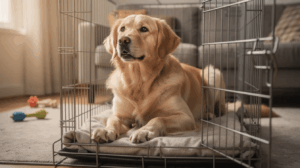
Crate regression can have several possible causes. The behavior may be related to the environment, learning history, routine, developmental stage, physical comfort, or anxiety.
Instead of assuming your dog simply does not want to cooperate, look at what changed before the regression appeared.
Common Emotional and Environmental Triggers
Stress or fear can trigger crate training regression, sometimes following a negative experience. Common triggers can include thunderstorms or fireworks, a household move, a shift in work hours that creates longer periods alone, or a boarding or travel experience that changed how the dog responds to confinement.
Negative associations can also develop after a frightening event occurs while the dog is crated. A loud noise, an uncomfortable experience, or another stressful event can change the way the dog responds to a space that was previously familiar.
Changes in routine can matter even when nothing obviously negative happened. If a family member starts working different hours or the dog suddenly spends more time alone, the previous crate routine may no longer feel predictable.
Consistency also matters. If one person opens the crate immediately when the dog vocalizes while another person waits for calm behavior, the dog may receive mixed signals about what happens after whining or barking.
Physical Discomfort and Medical Causes
Health problems can contribute to sudden changes in behavior, including crate aversion or new accidents. Merck Veterinary Manual notes that medical conditions and pain can contribute to behavior problems and recommends ruling out medical causes when behavior changes unexpectedly. Merck Veterinary Manual: Behavior Problems in Dogs
Check whether the crate still allows your dog to stand, turn around, and lie down comfortably. Also consider bedding, temperature, drafts, nearby appliances, and anything else that could make the area uncomfortable.
If a previously reliable dog suddenly begins having accidents, appears uncomfortable, or shows other unusual physical or behavioral changes, contact your veterinarian before making major changes to the training plan.
A sudden behavior change should not automatically be treated as a training problem. Medical causes can sometimes look like behavioral regression.
Developmental and Learning Factors
Adolescence and changes in routine can affect a dog’s behavior, but regression can also result from inconsistent reinforcement or asking for more crate time than the dog can comfortably handle.
If whining is repeatedly followed by release, the behavior may become more persistent. Likewise, excessive confinement or moving too quickly can create frustration or discomfort.
If early crate training moved too quickly or skipped important steps, your dog may not have developed a strong positive association with the crate. Returning to an easier stage and rebuilding the behavior gradually can be more productive than simply increasing pressure.
Dogs learn from consequences, so consistent responses matter. A reinforcement-based crate-training protocol presented at the 2026 Animal Behavior Society meeting used gradual steps and found that some individual dogs required smaller adjustments during training. Animal Behavior Society 2026 Program
Rebuilding Your Dog’s Relationship With the Crate
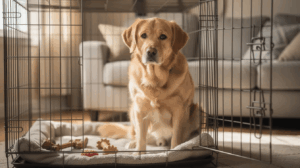
The first step in addressing crate regression is to stop forcing the issue. If your dog is panicking, dragging them inside or increasing confinement can make the situation worse.
Instead, rebuild the crate as a calm, rewarding place through gradual reintroduction, positive reinforcement, and appropriate management.
The following seven-day framework is a starting point, not a guarantee or fixed schedule. Some dogs will need more time at individual steps.
A Flexible 7-Day Crate Regression Reset Framework
This framework is approximate. Some dogs may move through the steps quickly, while others may need several days or longer at one stage. The goal is calm, voluntary participation rather than completing the schedule on a particular day.
If your dog shows significant distress, stop the exercise and seek veterinary or professional behavior guidance.
- Day 1: Reduce pressure. If practical, reduce unnecessary crate confinement and use an appropriately secured safe alternative such as a puppy-proofed area, exercise pen, or baby gate for management. Keep the crate available with the door open and avoid forcing your dog inside.
- Days 2–3: Rebuild positive associations. Place treats, meals, or appropriate enrichment near and inside the open crate. Allow your dog to investigate voluntarily. Do not immediately close the door.
- Day 4: Introduce brief closed-door periods. Once your dog is willingly entering and remaining comfortable, briefly close the door while you stay nearby. Start with a duration your dog can handle calmly.
- Day 5: Gradually increase duration. If your dog remains relaxed, add small amounts of time. Do not increase duration if the dog begins showing escalating stress.
- Day 6: Add distance gradually. Practice moving a short distance away and returning while your dog remains calm. Keep the duration appropriate for the dog’s current ability.
- Day 7: Practice a realistic routine. If your dog has remained comfortable, practice a brief real-world situation such as stepping into another room or leaving for a short period. Monitor the dog’s behavior when possible.
- Adjust as needed. If your dog becomes distressed at any point, return to the last step that was successful rather than pushing forward.
Veterinary guidance also recommends gradually building crate duration and distance rather than increasing both at once. VCA Animal Hospitals: Crate Training and Confinement
For additional foundational guidance, see Crate Training 101: The Simple Positive Approach.
Making the Crate Physically Comfortable and Appealing
The crate should provide enough room for your dog to stand, turn, and lie down comfortably. If your dog has outgrown the crate, reassess the size and setup.
Consider the location as well. A crate in a high-traffic area may be difficult for some dogs to settle in, while complete isolation may create problems for others. Choose a location that fits your dog’s needs and allows appropriate supervision.
Bedding should be comfortable and safe for the individual dog. If your dog destroys or consumes bedding, use an appropriate alternative rather than assuming more bedding is always better.
Some dogs also benefit from a partial cover or other reduction in visual stimulation, provided ventilation remains adequate.
Using Positive Reinforcement the Right Way
Positive reinforcement focuses on rewarding behaviors you want to see repeated.
When rebuilding crate comfort, reward voluntary movement toward the crate, entering the crate, remaining calm, and settling appropriately.
Use rewards your dog values, such as small food treats, praise, or an appropriate food-stuffed toy, when rebuilding positive associations with the crate. These rewards do not need to be exclusive to the crate. The goal is to make voluntary crate entry and calm behavior worthwhile while gradually increasing duration.
If your dog is comfortable eating meals in the crate, feeding can also help strengthen the positive association.
Avoid using the crate as punishment. The American Kennel Club recommends building positive associations with the crate and using gradual training rather than forcing a dog through fear or distress. American Kennel Club: Safe and Stress-Free Crate Training
If your dog whines mildly after their basic needs have been met, avoid immediately opening the crate in response to every brief vocalization. Wait for a calm moment when it is safe to do so, then continue the training at an easier level.
However, persistent or escalating distress is different from mild protest. If your dog is panicking, attempting to escape, injuring themselves, or unable to settle, stop the exercise rather than waiting for quiet. VCA specifically advises seeking professional guidance when a dog becomes very distressed during crate training. VCA Animal Hospitals: Crate Training and Confinement
Never scold, yell at, or bang on the crate. Punishment can increase fear and create a stronger negative association with confinement.
Routine, Schedules, and Real-Life Use
A successful reset needs to fit into the dog’s normal routine. Dogs may have more difficulty settling when their schedule changes frequently or when crate time is unpredictable.
A consistent daily routine can help make crate time more predictable. Pair the crate with appropriate rest, meals, enrichment, and calm activities instead of using it only when something enjoyable is ending.
Building a Daily Crate Routine That Prevents Backsliding
A sample routine might include a morning potty break, activity, breakfast, a short period of calm crate time, another break later in the day, evening activity, and a final potty opportunity before bedtime.
The exact schedule should reflect your dog’s age, health, potty needs, exercise requirements, and tolerance for confinement.
The goal is not to maximize crate time. The goal is to help your dog remain comfortable during appropriate periods of confinement.
Pairing crate time with positive experiences can help prevent the crate from becoming associated only with departures or unwanted situations.
Adjusting Exercise, Potty Breaks, and Mental Stimulation
Exercise and mental stimulation can influence a dog’s ability to settle, but more activity is not always better. Puppies can become overtired, while dogs with too little activity may have difficulty relaxing.
Before crate time, make sure your dog has had an appropriate opportunity to eliminate and has had enough activity for their individual needs.
Potty needs vary by age, health, size, routine, and individual dog. Young puppies generally need more frequent opportunities to eliminate, while adult dogs may be able to wait longer. Use your dog’s established potty routine rather than relying on a single time limit, and provide a break whenever there are signs that your dog needs to go.
Consistency Between Family Members
Everyone in the household should use the same basic cue and follow the same general routine.
If the cue is “crate,” use that word consistently. If another family member uses “kennel,” decide which cue the household will use going forward.
For mild vocalization, avoid creating a pattern where barking immediately results in release. At the same time, do not ignore genuine panic or distress simply to maintain a training rule.
A short written plan can help family members remember the crate cue, routine, rewards, and appropriate response to mild protest versus severe distress.
Common Crate Training Regression Problems and Solutions
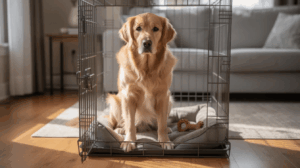
Even with a thoughtful reset, specific problems can appear. The first step is to determine whether the behavior is mild protest, a training setback, physical discomfort, or significant distress.
Problem: Dog Whines or Barks as Soon as You Close the Door
First, look at the intensity and pattern of the behavior.
Brief whining that does not escalate may indicate that the dog is frustrated or has been asked for more duration than they can handle. Panic looks different. Frantic scratching, escape attempts, heavy drooling, self-injury, or persistent inability to settle are more serious signs.
For mild protest, return to a shorter closed-door exercise and reward calm behavior. Gradually build duration rather than waiting for the dog to tolerate a long period immediately.
If the behavior escalates or appears panicked, stop the session and seek professional guidance.
Problem: Dog Has Started Having Accidents in the Crate
Start with basic questions:
- Has the dog’s water intake changed?
- Has the daily schedule changed?
- Are potty breaks frequent enough for the individual dog?
- Is the crate still an appropriate size?
- Has the dog shown any other signs of discomfort or illness?
Sudden accidents in a previously reliable dog deserve attention. Medical problems, changes in routine, and stress can all contribute to house-soiling.
If the accidents are sudden, repeated, or accompanied by other physical symptoms, contact your veterinarian.
Clean accidents thoroughly so lingering odor does not encourage repeat soiling.
Problem: Dog Now Refuses to Enter the Crate at All
Do not physically shove or drag your dog into the crate.
Instead, return to voluntary entry. Leave the door open and reward the dog for approaching the crate, looking toward it, and eventually stepping inside.
If necessary, make the exercise easier by increasing the distance between the dog and the crate at first. Gradually work closer as the dog becomes comfortable.
If the dog remains highly distressed or refuses the crate despite patient gradual work, consider professional guidance rather than increasing pressure.
Problem: Regression After Travel, Boarding, or a Major Life Change
Travel, boarding, household changes, schedule changes, and other stressful experiences can alter how a dog responds to confinement.
After a major change, temporarily reduce expectations and return to easier crate exercises. Rebuild positive associations and increase duration gradually.
If your dog shows signs of separation-related distress, the crate may not be the only issue. Some dogs with separation anxiety become more distressed when confined, making it important to distinguish separation-related behavior from simple crate resistance. American Veterinary Society of Animal Behavior: Separation Anxiety
When to Call a Professional Trainer or Veterinarian
Many mild crate-training setbacks can be addressed by returning to easier steps and rebuilding positive associations. However, some situations require more support.
Consider professional help when the problem continues despite gradual training, when you are unsure how to proceed, or when your dog is showing behavior that is difficult to manage safely.
Signs That Warrant Veterinary Attention
Contact your veterinarian promptly if your dog’s crate regression occurs alongside:
- Sudden or repeated accidents
- Signs of pain or discomfort
- Significant changes in drinking or eating
- Persistent heavy drooling
- Unusual restlessness
- Difficulty getting comfortable
- Sudden changes in behavior
- Self-injury
- Other physical or behavioral changes that are unusual for your dog
Medical conditions can contribute to behavior changes, so sudden regression should not automatically be treated as a training issue. Merck Veterinary Manual advises ruling out medical causes when a dog’s behavior changes unexpectedly. Merck Veterinary Manual: Behavior Problems in Dogs
Older dogs with new crate aversion also deserve veterinary attention when the behavior is sudden or accompanied by other changes. There is no need to rely on a specific age cutoff when deciding whether a veterinary evaluation is appropriate.
How Off Leash K9 Training Southern Delaware Can Help
Some cases go beyond what a home reset should address, including intense panic, escape attempts, self-injury, or behavior that may be related to separation anxiety or another medical or behavioral concern.
A veterinarian can help rule out medical causes, while a qualified professional can help assess the training and management approach.
Off Leash K9 Training Southern Delaware serves dog owners throughout Southern Delaware and offers private training options.
If you need hands-on support, private dog training provides direct trainer involvement for owners working on obedience and behavior goals in Southern Delaware.
A free phone consultation can help you discuss your dog’s behavior, training history, and goals before determining whether professional training is appropriate.
Conclusion and Next Steps
Crate training regression can be frustrating, but it does not mean your dog has “failed” or that earlier training was wasted. A change in crate behavior is a reason to investigate what may have changed and adjust the training plan accordingly.
Some dogs improve with a gradual reset, while others need veterinary or professional behavior support.
Here are your immediate next steps:
- Identify what changed in your dog’s routine, environment, health, or recent experiences.
- Reduce pressure and return to the last crate-training step your dog handled comfortably.
- Use positive reinforcement to rebuild voluntary crate entry and calm behavior.
- Keep crate duration appropriate for your dog’s individual needs.
- Contact your veterinarian if the regression is sudden, severe, or accompanied by physical or behavioral changes.
- Seek professional help if panic, escape attempts, or persistent crate refusal continues.
A patient, consistent approach can help rebuild comfortable crate habits while giving you a clearer understanding of what your dog needs.
Frequently Asked Questions About Crate Training Regression
Is it normal for crate training to get worse before it gets better?
Regression can happen, particularly after changes in routine, negative experiences, or developmental changes. However, sudden or severe crate aversion should not automatically be considered normal. If the behavior is accompanied by panic, self-injury, accidents, or other unusual changes, consider veterinary or professional guidance.
How long should I crate my puppy during the day if I work full time?
There is no single schedule that works for every puppy. Young puppies need frequent potty opportunities, and the appropriate interval depends on age and individual needs. If you work full time, plan for regular breaks and use a puppy-proofed area or other appropriate management option when extended confinement would be too long.
Should I give up on the crate if my rescue dog panics?
Do not force a dog that is panicking into continued crate exposure. Consider a safe alternative confinement area while you determine what is causing the distress. If the dog continues to panic or attempts to escape, consult your veterinarian or a qualified behavior professional. Gradual reintroduction may be appropriate once the dog is ready.
Can I fix crate regression without using food rewards?
Food is one useful reinforcement option, but it is not the only one. Depending on what your dog values, praise, toys, play, or other appropriate rewards can help reinforce voluntary crate entry and calm behavior. The important part is that the reward is meaningful to the individual dog.
Is a playpen a good alternative to a crate for dogs who regress?
A puppy-proofed pen or gated area can be a useful management option for some dogs, particularly when crate confinement causes significant distress. It does not have to replace crate training permanently. The appropriate setup depends on the dog’s behavior, safety needs, and ability to remain calm.
When should I consult a professional about crate regression?
Consider professional guidance when crate aversion persists despite gradual training, when your dog shows panic or escape behavior, or when you are unsure how to proceed. A veterinarian should be contacted when sudden behavioral changes may have a medical component.
My dog was fine for years. Why is this happening now?
Sudden regression in an adult dog can be related to changes in routine, environment, learning history, or physical health. Look for recent changes and consider a veterinary evaluation if the change is sudden or accompanied by other unusual symptoms.
Helpful Tools and Training Support
The following tools may help with management and gradual crate training, depending on your dog’s individual needs:
- Baby gates or exercise pens – useful for managing access to the home when reducing crate pressure
- Food-stuffed toys or appropriate enrichment – can help create positive crate associations when used safely
- Comfortable crate bedding – useful when appropriate for the individual dog
- Enzymatic cleaner – helps thoroughly clean areas after accidents
- White noise or calm background sound – may help reduce some environmental distractions for certain dogs
- Pet camera – can help owners observe behavior during brief absences and identify signs of distress
Patient, consistent crate work can support calmer routines, easier travel preparation, and more comfortable confinement when the crate is appropriate for your dog.
